myRentokil
Manage your business
In this interview, we explore how Rentokil research entomologist Matt Green turned a fascination with insect behaviour into a scientific approach to pest control—one that takes the ordinary fly seriously as a genuine health threat.
Pest control was once closely associated with spraying insecticides. Today, pest management is more targeted, with greater emphasis on understanding pest behaviour, prevention, proofing, and carefully selected interventions.
That evolution owes much to experts like Rentokil research entomologist Matt Green, who has spent nearly two decades turning observations of insect behaviour into practical pest-control solutions. His work includes laboratory research, product development, claims testing, field trials, and technical support for Rentokil businesses.
“A lot of what I do is behavioural biology, looking at how insects behave around boxes,” Matt says.
By “boxes”, he means the devices placed on customers’ premises, including insect light traps, adhesive traps, and pheromone traps. Matt studies how insects interact with these devices and how changes to their design or positioning can improve performance.
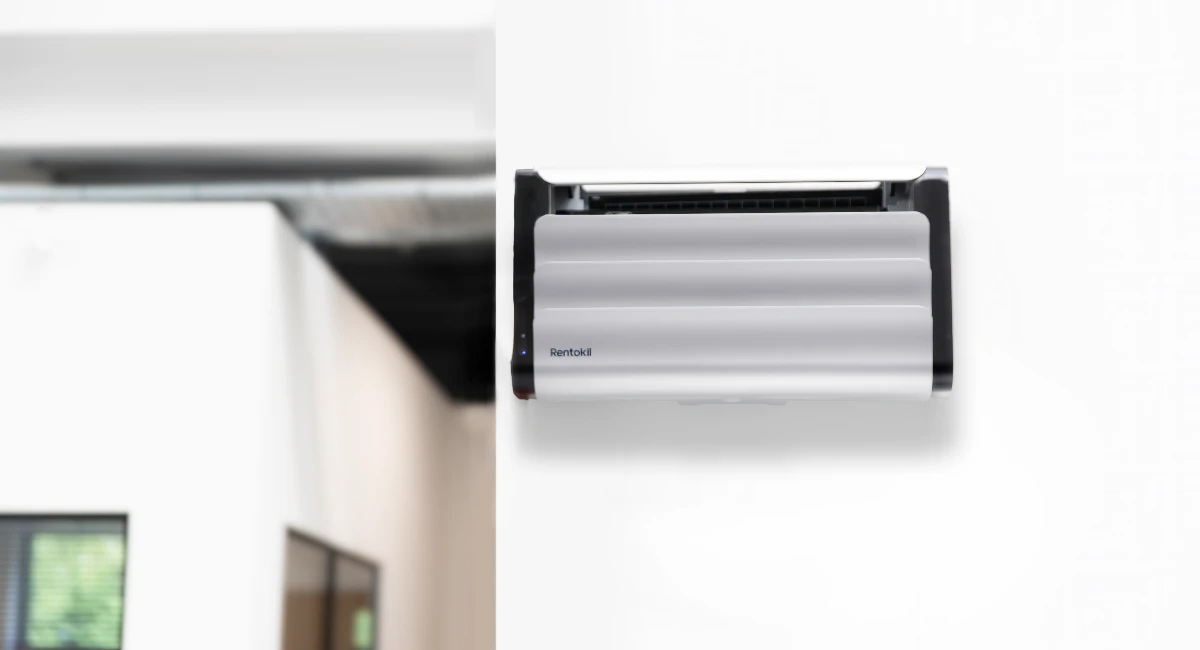
An effective pest-control device must work with the target insect’s natural behaviour. That requires researchers to understand what attracts the insect, how it moves towards a device, and how its surroundings influence its response.
“That’s my job in a nutshell: looking at how insects interact with the boxes we put on our customers’ premises to ensure they work really well,” Matt explains.
His work in product development includes controlled laboratory studies and field trials. Laboratory testing allows the team to compare product designs under repeatable conditions. Claims testing provides evidence for performance statements, while field trials examine how solutions work in real-world settings.
This research-led approach has become increasingly important as pest management has moved beyond routine pesticide applications.
“An average pest control technician out in the field 20 years ago would have gone out and sprayed for everything,” Matt says. “Chemical treatments continue to play a role where appropriate, but they are increasingly considered alongside preventive measures, proofing, and non-chemical solutions.”
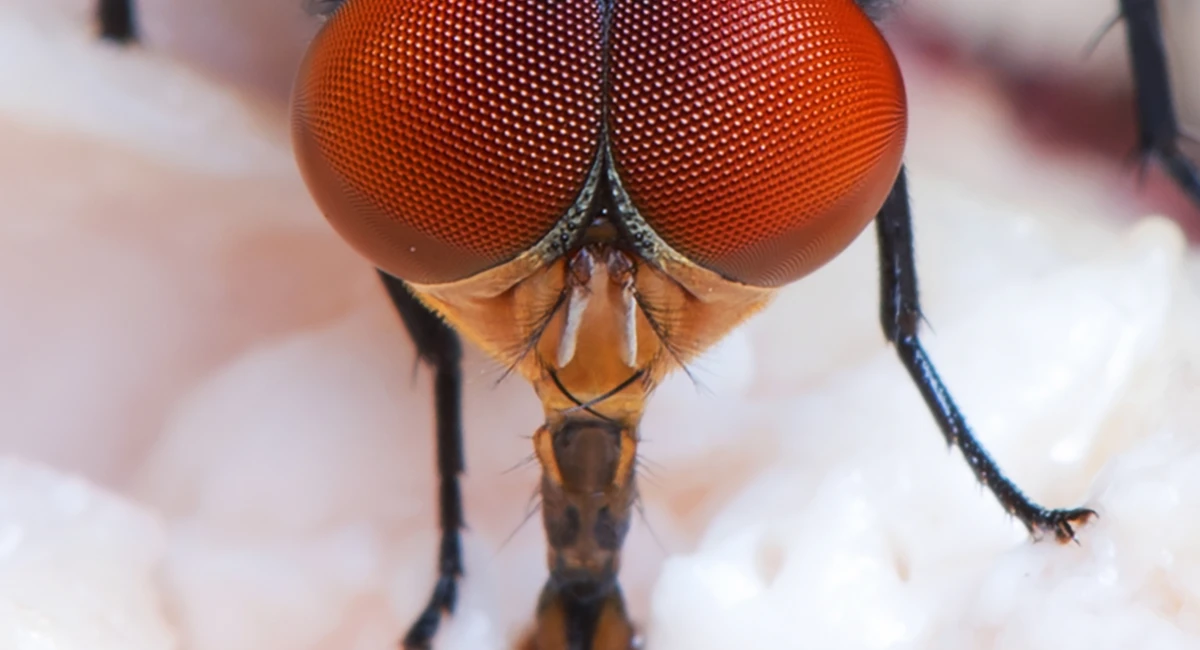
Matt’s research into flies is a clear example of how entomological expertise can lead to innovation. Although frequently dismissed as just a nuisance, their movement between waste, decaying matter, food, and surfaces makes them a contamination risk.
“The pests most likely to cause sickness are probably flies,” Matt says. “They are very good mechanical vectors of bacteria. It's a danger that tends to fly under the radar.”
The level of risk depends on the environment. A fly at a waste site presents a different situation from one in a hospital ward, commercial kitchen, or food-processing facility. In sensitive settings, a fly has opportunities to transfer bacteria each time it moves between contaminated material and clean surfaces.
For Matt, this means the performance of an insect light trap should not be measured by catch totals alone. How quickly a trap removes a fly from the environment is also crucial.
“The longer a fly is in the room, the more chance it has to move bacteria around,” he explains.
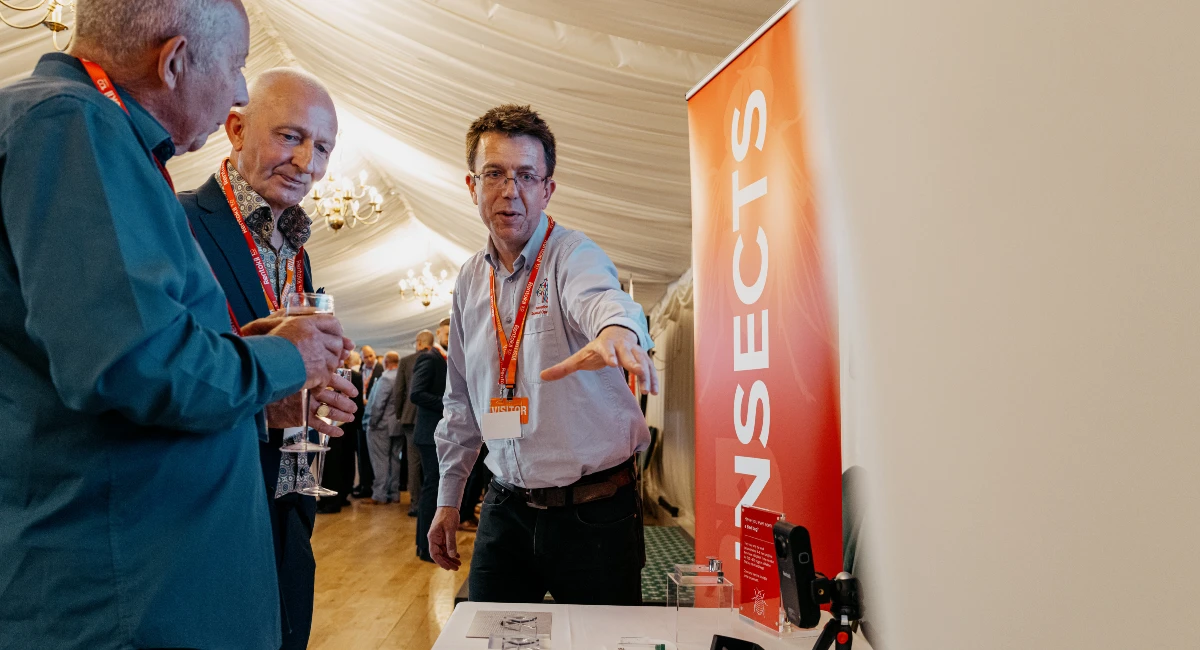
Early in his Rentokil career, Matt questioned how insect light traps were tested and found the resulting data was being filed rather than used to inform product development. He also found there was no standardised British, European, or global testing method, making it difficult to compare products or identify which design features improved performance.
To address this, Matt tested devices from across the market, from inexpensive units to premium traps, releasing flies into controlled test rooms and measuring how quickly each device caught them. Repeated over several years, the experiments helped him and the laboratory team build an evidence base around what makes an insect light trap effective.
This work contributed to Rentokil’s award-winning Lumnia LED insect light traps and established capture speed as a key performance metric.
“I don’t care how many it catches in 24 hours; I care about how quickly it removes a fly from the environment,” he adds. The sooner a fly is caught, the less time it has to move between surfaces and transfer bacteria, linking laboratory performance directly to the risk the solution is designed to reduce.
“We don’t just sell fly traps; we sell fly disease risk-reduction as a service,” he says.
Matt’s research also informs the positioning of an insect light trap in the spaces it is designed to protect. He explains that flies see a different portion of the colour spectrum than humans.
“Their vision begins in the ultraviolet range and extends through yellow and orange, but stops short of red, so red objects appear dark grey or black to them. Their colour vision is limited, but their contrast vision is strong.”
This sensitivity to ultraviolet light shapes how flies respond to insect light traps. Competing sources such as windows, spotlights, and ceiling lights can outshine a trap, making it harder for the device to stand out.
“This tells us that fly traps function best in the dark, and allows us to optimise product placement,” Matt says. “Applying a behavioural approach ensures the performance proven in testing delivers genuine, on-site benefits for our customers.”
Thanks to Matt's research, the Lumnia LED range:
For Rentokil, innovation is not simply about introducing new technology. It is about applying entomological knowledge to define a problem, test possible solutions, and develop evidence-based solutions.
Matt's work has proved invaluable to Rentokil's product development programme. The insights researchers bring not only shape advanced product design but also underpin credible performance claims and, ultimately, customer satisfaction.
Concerned about flies on your premises? Learn more about Rentokil's fly control solutions, including the Lumnia LED insect light traps.
* Up to 80% greater reach than traditional fluorescent lamps
** Lumnia LED lamps save up to 79% energy compared to competitor fluorescent bulb insect light traps using their unique adaptive mode technology
Developed with innovative, patented LED technology, our Lumnia range of insect light traps are designed to attract, kill and encapsulate insects hygienically