myRentokil
Manage your business
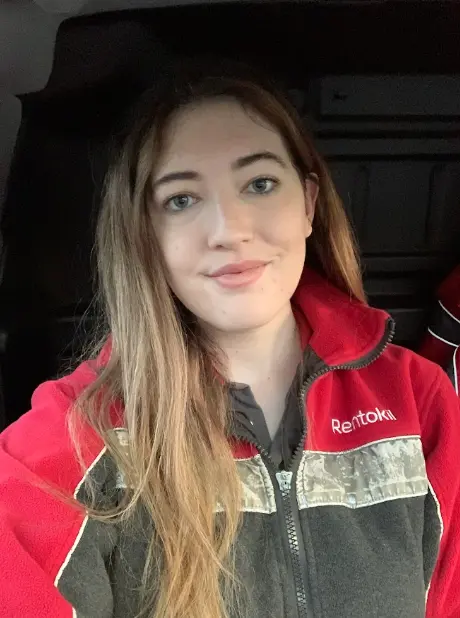
In this interview, we explore rodent research specialist Heather Martin’s passion for her subject and how this has influenced her commitment to developing humane pest control solutions.
Rodent expert Heather Martin didn’t start out trying to control rodents. She started out trying to save them. Before the monitoring stations, the exclusion surveys, and the commercial contracts, her post-grad research focused on how to stop one squirrel from killing another. The answer she worked on was a lattice of coloured light.
"My focus was on protecting red squirrels from invasive grey squirrels, which carry a disease fatal to reds. We worked on an EU scheme that used different-coloured lasers to create a 'virtual fence' to deter grey squirrels without harming them. That experience—using tech for non-lethal solutions—was my entry point into the world of rodent innovation."
So, as a young researcher, her self-declared mission was to build invisible walls of light to hold back one species so another could survive. No traps, no poison, no bodies. Just a nudge, a signal that said “not here”. It is, in miniature, the entire philosophy she would carry into a career that most people assume is about the opposite.
Because here is the uncomfortable truth at the centre of her work. The animals she is paid to manage are not stupid, not simple, and not to be dismissed. They are, by almost any measure, extremely capable and resourceful.
Spend any time listening to Heather describe rodent behaviour, and the word that keeps coming up isn't "disgusting" or "dirty". It's fascinating.
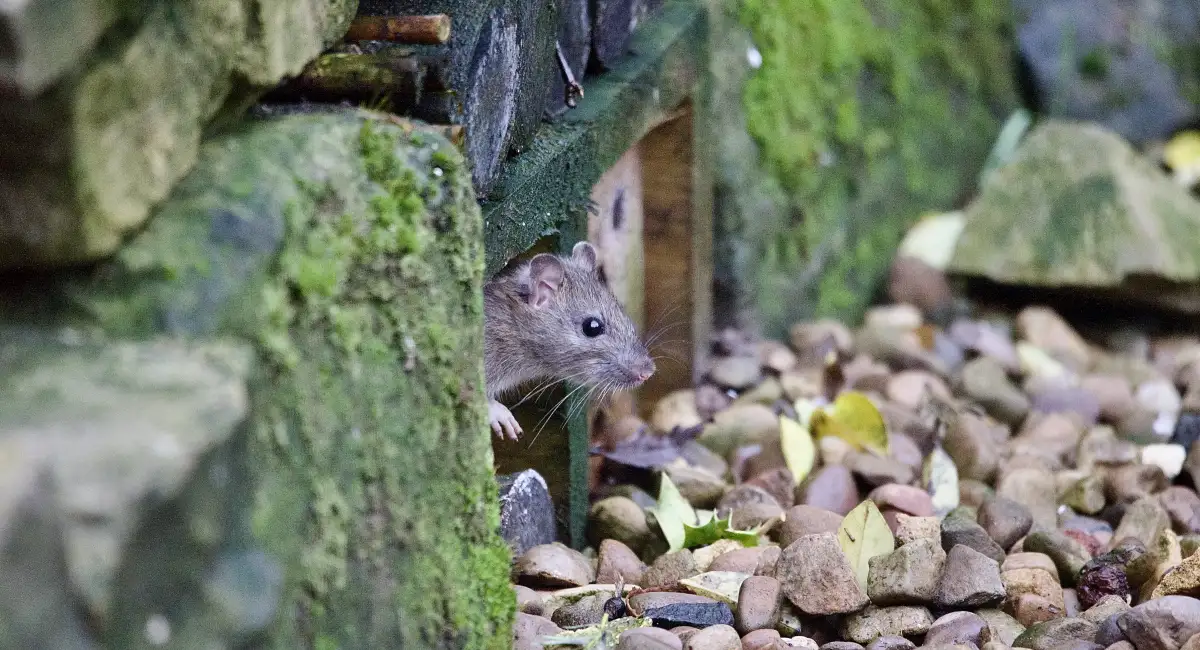
"It is fascinating to study their behaviour, even if we do have to control them to protect public health. Rodents aren't hapless intruders that blundered into our homes by accident. They're strategists who carefully read their surroundings.”
"It is not uncommon for rats to live in gardens without entering the house. They burrow underground where the temperature is consistent. If they have a food source, they might stay there for years. However, if that food source is removed, or if they are displaced, they may try to come inside."
That is not the behaviour of a pest blundering around looking for trouble. It is a reaction to a reasonable risk assessment. A rat that has found warmth and food will stay put for years, avoiding the dangers of human contact entirely. Even their daylight appearances, so often read as boldness or sickness, are usually a sign of a population managing its own internal competition:
"Rodents are naturally nocturnal; if they are coming out during the day, it is typically because there is a large enough population that they are competing for food at night."
They’ve evolved alongside us. They’ve learned about our buildings, our bins, our delivery routes, and our blind spots. They are, in the most literal sense, animals that got very good at living with humans, which is precisely what makes them so hard to keep out.
So how do you humanely control an animal you genuinely admire? The answer for Heather reveals a discipline that has moved a long way from the poison-and-be-done reputation it once carried. The rodent control method is a careful judgment, made animal by animal, site by site:
“Where pest control once measured success by body count, it now measures it by exclusion, monitoring, and prevention—keeping the animal out rather than killing it once it's in. It is, if you squint, the red squirrel laser fence all over again: a signal that says not here, delivered with the least possible harm.”
"There is still a place for rodenticide, but the choice depends entirely on the environment and whether there are pets or other wildlife nearby. In some cases, a combination of methods is necessary."
Perhaps the most revealing thing Heather says has nothing to do with traps at all. It's about definition, and how blurred the line between "wildlife" and "pest" really is.
"Pests are defined as such when they cause a nuisance to humans, pose a risk to human health, or cause damage to property and food supplies. However, the definition often depends on the setting. For example, a squirrel in a city is often viewed as a nuisance, whereas that perception might be different in a rural woodland area or a caravan park. Ultimately, it comes down to whether the animal is negatively impacting our environment, health, or resources."
In other words, the "pest" label says as much about us as it does about the animal. A squirrel is a nuisance on one street and a conservation priority a few miles away. The rat in the wall is simply an intelligent survivor that has ended up somewhere it threatens our health, our food, or our homes. The animal hasn't changed. The context has.
Heather adds: “Understanding that it's the situation, not the creature, that makes control necessary is exactly what keeps the response proportionate rather than punitive.”
It would be easy to assume that admiring rodents makes someone worse at controlling them. Heather's career suggests the exact opposite. The more you respect how these animals think—their caution, their memory, their competitive intelligence, their genius for exploiting our mistakes—the better you get at guiding them out in a humane way.
You stop trying to win against the rat and start trying to make your building uninteresting to it. You remove the food source instead of waiting for the infestation to develop. You monitor before there's a problem, because you know the animal is watching your patterns far more closely than you're watching it.
The scientist who once built fences out of light to protect squirrels now spends her days designing a different kind of boundary—employing rodent exclusion measures, digital pest monitoring technology, and hard-won respect for an adversary she's never quite stopped admiring.
That's not a contradiction. It might just be the most effective pest control there is. For business, a prevention-first approach means fewer disruptions, cleaner audits, and a reputation protected before a problem ever reaches your customers. If you'd like that type of considered protection across your site or estate, talk to our commercial team.
Tailored, reliable pest management for homes and businesses, ensuring pest-free spaces for work, life and play