myRentokil
Manage your business
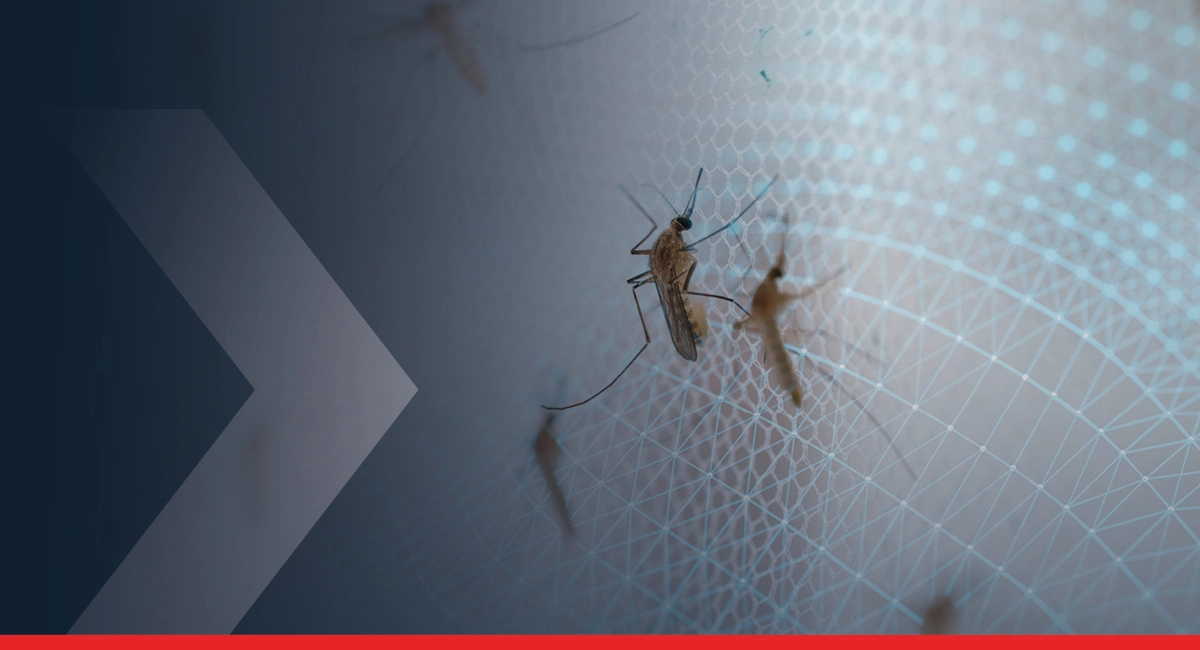
Despite their small size, mosquitoes can cause a huge threat to public health and are considered the world's deadliest animal. As vectors, they can transmit several dangerous diseases, such as malaria, dengue and chikungunya, when they bite humans. What's more, combatting mosquitoes can be difficult due to the nature of a pest that can survive in a variety of environments – wild mosquitoes can be found in forests, swamps, rivers and lakes while more urbanised mosquitoes, such as the Aedes species, can breed in small areas where water has accumulated.
With a tropical climate, diverse landscapes and varying rainfall patterns, Brazil is a country that faces significant challenges when it comes to mosquito management. For example, last year, the country saw a record number of deaths from dengue, and it sadly looks like that record will be broken again in 2023. The World Health Organization reports that in July this year, the WHO region of the Americas already surpassed the number of dengue cases it reported in the entirety of 2022. So, what can we do to protect people from vector-borne diseases?
A first step is identifying where mosquitoes are posing a threat, so monitoring and mapping outbreaks is essential. Our mosquito monitoring solution is one of the tools helping us do that in Brazil – to dive deeper into this technology, we’re pleased to share some insight from one of our experts. Carlos Vagner Peçhana, Technical Director and leader of Vector for our LATAM region, is a biologist and entomologist specialising in urban pest management and entomology for public health. In the videos below, Carlos leverages his expertise from 35 years in the pest management industry to share how and why the technology we’re using is changing the face of vector management as we know it.
In 2016, Rentokil was challenged by the Brazilian Olympic Committee to provide mosquito management for the Rio games. At a time when the Zika virus was spreading quickly and could put thousands of supporters and athletes at risk, we took this responsibility very seriously.
To enhance our vector management capabilities, Rentokil acquired Ecovec – a company from the University of Minas Gerais that had developed a monitoring system that could identify the presence of certain viruses in mosquitoes. By detecting an outbreak from the source, rather than waiting for humans to contract a disease, this groundbreaking solution meant we could respond to mosquito threats much quicker than previously possible. Let’s hear from Carlos on how this innovative system works.
As Carlos puts it, our mosquito monitoring technology works like a “radar or x-ray to detect the problem, helps identify breeding and hiding sites and where action is needed”.
With this insight, we’re not only more informed but can also reduce our environmental impact because we’re using insecticides precisely where we need them. This minimises waste and the potential for non-target species, such as pollinators, to come into harm.
Watch Carlos explain how this technology is such an exciting step forward in the video below.
Carlos advises that it’s best to approach vector management like a ‘mosaic’, taking advantage of all our insight and data to develop mosquito control strategies. After gaining information from our monitoring devices, some of the control techniques we’re using in Brazil include:
As insecticide resistance continues to rise, we’re also looking at more biological ways to control pests. Some of our innovations for mosquito treatments include:
Sterile mosquito treatments – only female mosquitos feed on blood, so by releasing genetically modified male mosquitos that can’t reproduce, we can compromise their reproduction without putting humans at risk. With these methods, we’ve gained 85–98% control of mosquito management in certain areas.
Bacterial treatments – Carlos compares this control method to a ‘vaccine’ because it involves the use of bacteria that work to prevent the mosquito from being a good vector and, therefore, inhibit the pest’s ability to spread certain diseases.
Larvicide treatments – we’re implementing new technologies such as traps where female mosquitoes will go into to lay eggs and pick up larvicides that they then carry and spread elsewhere.
The world is becoming more digital, and so are we. We’ve recently partnered with a University in Brazil who’ve added a microphone and WiFi signal to our Ecovec monitoring system. We aim to be able to detect mosquito species by sound remotely and, therefore, respond with necessary treatments even quicker.
We’ve also adopted the use of drone aerial vehicles for surveillance and targeted distribution of treatments. This includes using drones to:
detect mosquito breeding sites with UV cameras that make it easy to find places where water has collected
apply larvicides in hard-to-reach areas or dangerous spots like the ruins of a building
fly at low altitudes where the propellor’s air force can distribute treatments with precision
We’ve had great success using drones in our mosquito control efforts, both in terms of effectiveness and sustainability. With drones providing more targeted and enhanced coverage, they’ve enabled more efficient control of mosquito habitats and reduced pesticide use. For example, in a large public park with a lake and significant challenges from aquatic plants hiding and creating potential mosquito harbourage sites, the application of larvicides with drones enabled an impressive 97% control over mosquitoes.
Click here to learn more about our use of drones globally from Dr Broox Boze, Technical Director for Vector Disease Control International (VDCI).
As you can see in this blog, we’re implementing some of the latest, innovative technologies to protect what matters most to our customers. While our mosquito monitoring technology started in Brazil, our innovative approach to pest management is leveraged across our 90 markets. To learn more how our history of innovation and what’s coming next, click here.
Round-the-clock digital pest management and monitoring