myRentokil
Manage your business
Fluorescent lamps are being phased out worldwide as a result of an international treaty, the Minamata Convention on Mercury. This came into force in 2017 and regulates the entire lifecycle of mercury, including its supply, manufacturing, storage and waste. The Convention set a timetable for ceasing manufacture and trade in many mercury-containing products to reduce the amount contaminating the environment resulting from human activity and affecting people’s health.
All fluorescent lamps used for normal lighting are already being removed from sale in the EU and UK by September this year (2023), but fluorescent UV lamps have been given temporary exemption until 2027. The US is moving to a ban more slowly, with two states already setting dates and the 137 parties that have signed the Convention have agreed to phase out compact fluorescent lamps by 2025.
When the Minamata Convention was first discussed and EU laws controlling mercury use were drawn up in 2011, there were no viable alternatives to UV bulbs for specialist applications. Applications such as fly control, medical sterilisation, and curing of certain industrial products were given a temporary exemption, which was maintained in 2021.
Since then, LED technology has greatly advanced, so it is not just a viable mercury-free alternative for producing UV light, but also, products using LEDs have superior performance in several ways, which are described below. There are now no valid reasons for using products with fluorescent UV tubes – efficiency, cost, energy use, environment – and they should be replaced as soon as possible.
All fluorescent lamps contain mercury because it is a basic component of the lamp. The amount used in each tube has been reduced since the Minamata Convention was created, resulting in limits in some countries set by legislation. Although the toxic mercury content is the reason for phasing them out, there are also other components that pose a health hazard and make the recycling of the lamps more complex.

A fluorescent lamp has a sealed glass tube containing mercury vapour and a mixture of inert noble gases, such as argon, neon and xenon at low pressure (about 0.3% atmospheric pressure). A tungsten filament at each end of the tube is heated by electricity to emit electrons that ionise the atoms of mercury and the gases. The filaments are coated with a mixture of barium, strontium, and calcium oxides to improve their performance. The noble gases are added to help the flow of electrons in the tube and increase the ionisation of the mercury atoms.
An ionised mercury atom emits a photon of UV light as it quickly reverts to its normal state and is repeatedly ionised as the electrons flow through the tube. For standard lighting, the UV light must be converted to visible light by a coating on the inside of the tube consisting of metallic and rare earth phosphor salts – adding more chemicals to the lamp. This coating absorbs the UV and emits it as visible wavelengths. The colour temperature of the light emitted can be made to look warmer or closer to daylight by changing the constituents of the phosphor coating. For UV lamps, there is no need for the coating, so the glass tube can be transparent.
In addition to these components, the lamp has a ballast, consisting of thin wire wound around a magnetic core, to regulate the electric current and a starter to preheat the filaments to set the process going.
Although a fluorescent lamp is more energy efficient than an incandescent lamp, energy is lost at several stages as heat: by the filaments, the ionising process, the phosphor coating, and the operation of the ballast. The ballast converts about 10% of the power it uses to heat, the ionised mercury vapour about 15%, and converting the UV light to visible wastes about 55% of the UV light energy as heat.
Fluorescent lamps have multiple points of potential failure – the ballast, starter, and heating filaments losing their coating – visible by the blackening of the ends of the tubes – and the mercury vapour being absorbed by the glass tube and the coating. These restrict the life of the lamps and therefore affect the cost of maintenance in commercial applications.
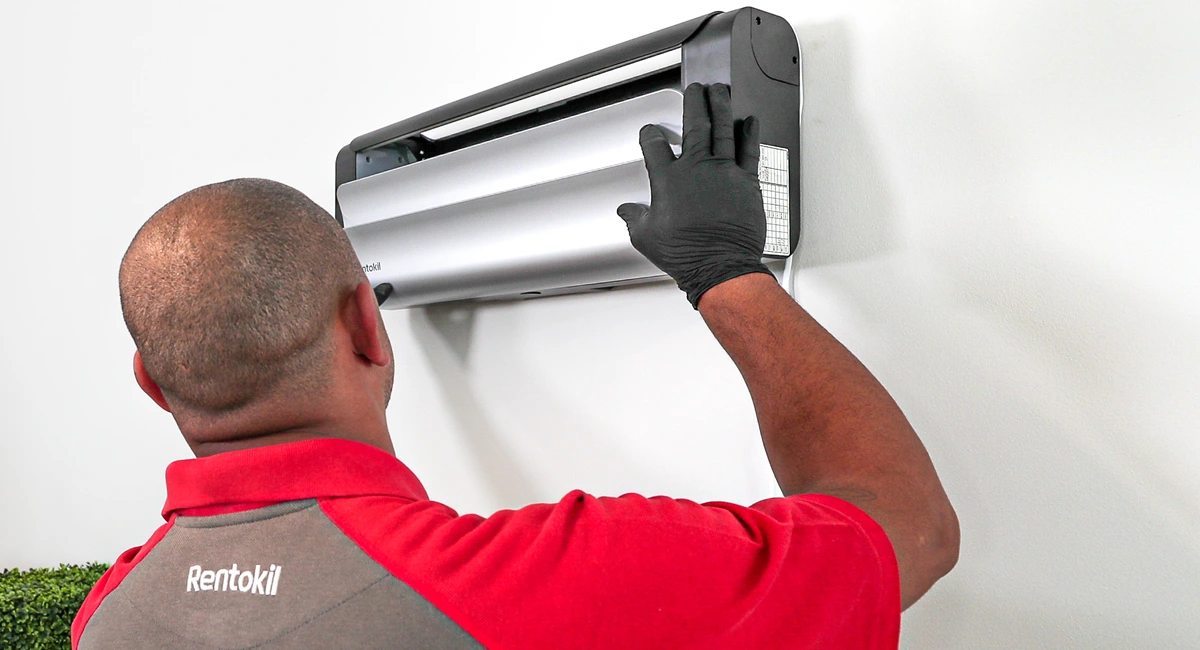
Modern LED lamps use 50% of the electricity of equivalent fluorescent lamps, converting about 95% of the energy into light, thus giving off less heat.
They have fewer major components and use fewer materials. They are not classified as hazardous waste so can be disposed of in the normal waste. However, they can be recycled to recover any glass and various metals used in the electronic circuits and housing (depending on the type of lamp) – mainly aluminium and copper but also smaller quantities of gold and nickel.
LED lamps are more robust than the glass tubes of fluorescent lamps, which can shatter and contaminate the area with glass fragments, mercury, the glass coating and chemicals used in the filaments.
Modern LEDs can last over 50,000 hours of use, which is 2–3 times the life of fluorescent tubes. The UV LEDs used in Lumnia insect light traps, for example, last three years compared to one year for equivalent fluorescent UV tubes.
Mercury is ubiquitous in the environment at low levels and is released into the atmosphere, soil and water from a variety of sources, including coal burning, forest fires, volcanoes, rock weathering, ocean evaporation, small-scale gold mining and many industrial processes. It constantly circulates across continents, is deposited and is re-released into the environment, but can reach dangerous levels due to human activity.
Mining and production processes, including recycling products containing mercury, put workers at risk, and the Minamata Convention also seeks to protect them. All products containing mercury, including the UV fluorescent lamps in insect light traps, should be sent to specialist recycling facilities.
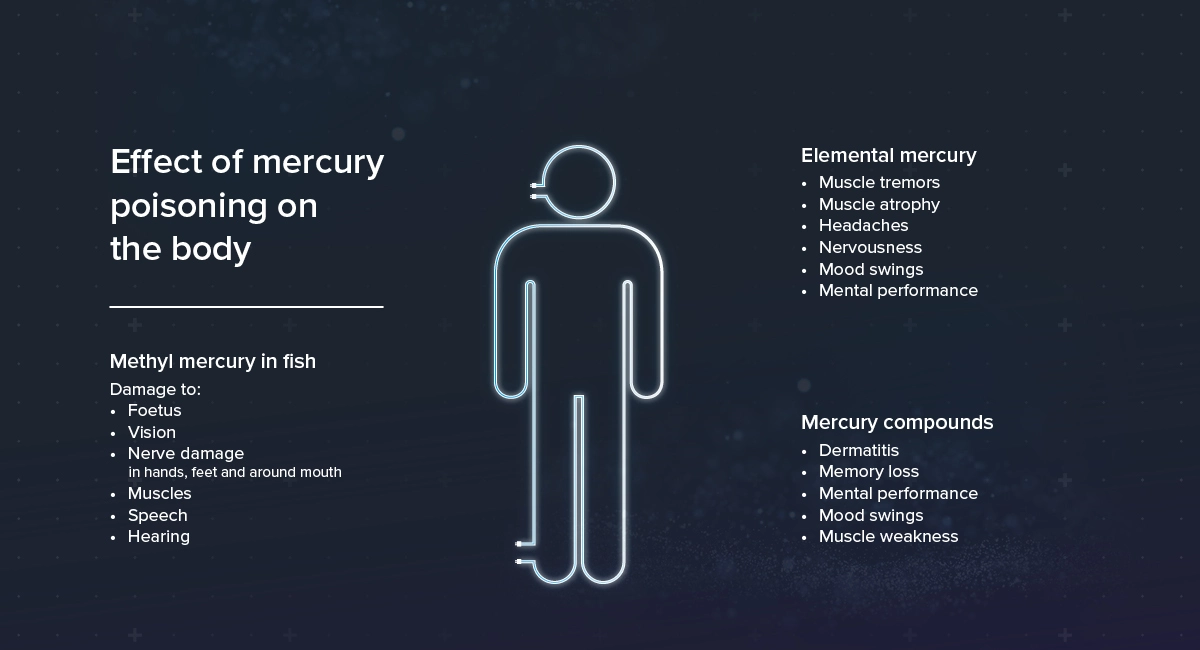
Mercury is a neurotoxin that can enter the body in three forms: methyl mercury, elemental mercury, and other compounds of mercury.
Environmental contamination of mercury results in mercury entering water-based ecosystems where microorganisms ingest it and change it into an organic form, methylmercury. Certain types of fish and shellfish ingest methyl mercury, and it is concentrated in fish that eat other fish as it moves up the food chain and then enters the human food chain. It is especially dangerous to women and unborn children as it can cross the placenta and damage the developing child.
The symptoms of methylmercury poisoning include loss of peripheral vision, "pins and needles" in the hands, feet, and around the mouth, and impairment of movement, speech and hearing.
Metallic mercury can be released from a container, product or device when a product breaks and mercury is spilt. Fluorescent lamps consume about 10% of mercury used in products worldwide. Older products that contain mercury include thermometers, barometers, switches and thermostats. The mercury vapour given off can be inhaled and if not cleaned up thoroughly will remain a hazard in the vicinity. Inhaling metallic mercury is more dangerous than ingesting it.
The symptoms of acute exposure include tremors, muscle weakness and atrophy, headaches, mood swings, nervousness, and poor mental performance.
Mercury is used in dental amalgam, which is considered safe for the user and has been used in fungicides, antiseptics, preservatives, disinfectants, skin lighteners and anti-ageing products. Most of these products are no longer in use in developed countries and amalgam use is being reduced and replaced. Over-exposure to these products can lead to toxic effects, including skin rashes and dermatitis, mood swings, memory loss, mental disturbances, and muscle weakness.
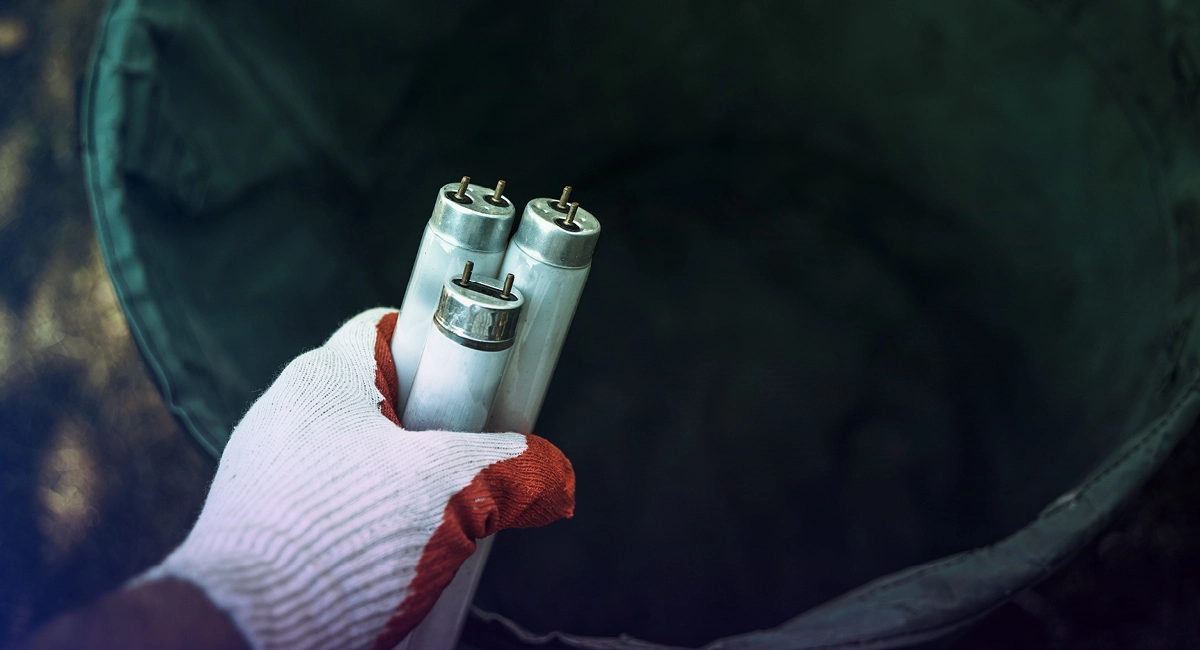
There is worldwide agreement that fluorescent lamps should be replaced as soon as possible, to reduce the amount of mercury that is used in industry, homes, and businesses, and reduce human exposure to the neurotoxin.
Fluorescent UV lamps in insect light traps (ILTs), electronic fly killers (EFKs) and other industrial UV applications were given an extension of the ban to allow manufacturers to develop alternative products. Commercial fly-control devices using LEDs have now been available for six years and all other applications also have suitable LED products, so the extension could be changed at any time.
It makes environmental, economic and business sense to change to the latest generations of LED insect light traps as soon as possible.
Developed with innovative, patented LED technology, our Lumnia range of insect light traps are designed to attract, kill and encapsulate insects hygienically