myRentokil
Manage your business
Stored product insects are major pests in the food industry. Many species of beetle, weevil, moths and mites have evolved to feed on natural products such as seeds, grains, nuts, dried starchy products, wool and leather. We humans have learnt that these same products make nutritious food, either raw or as ingredients in a multitude of processed products, or they make useful items such as clothes and carpets.
Our activities in farming and handling food all along the food supply chain provide these stored product insects and arachnids with abundant food supplies and ideal sheltered breeding places — if we allow them access. Their size, from less than 1mm for mites and eggs and larvae of insects, to less than 1cm long for adult beetles and weevils, means that they can be difficult to detect until an infestation has a large population.
There may be no direct harm from eating the odd insect that has found its way into your food, and they generally only consume a small proportion of any stored food — if discovered early — but it is often the “collateral damage” that is the major problem. There are multiple ways that stored product insects can damage food.
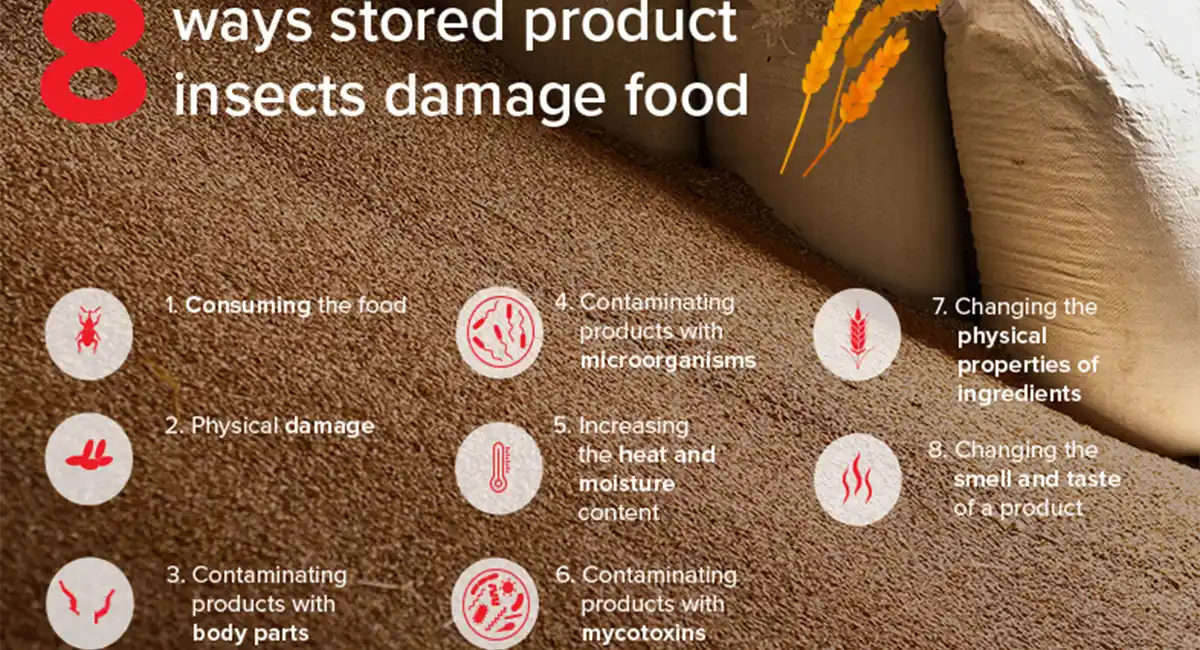
Research commissioned by Rentokil showed that stored product insects cause the greatest financial losses to food processing businesses of all the pests that affect food businesses — including mice, rats, flies, cockroaches and birds. Out of 1000 companies surveyed in five countries, 60% said they lost 1-9 % of annual revenue to SPIs and 73% were concerned about losses due to SPIs.
The food processing businesses said they were affected by SPIs due to:
The aim of any food business is for complete exclusion of insects. Pest management programmes should focus on prevention, detection and early elimination of insect infestations using integrated pest management methods. Food processing facilities are often large, complex buildings with many opportunities for insects and other pests to enter. They will require pest management activities customised for the individual facility and location.
The key practices to prevent SPIs are:
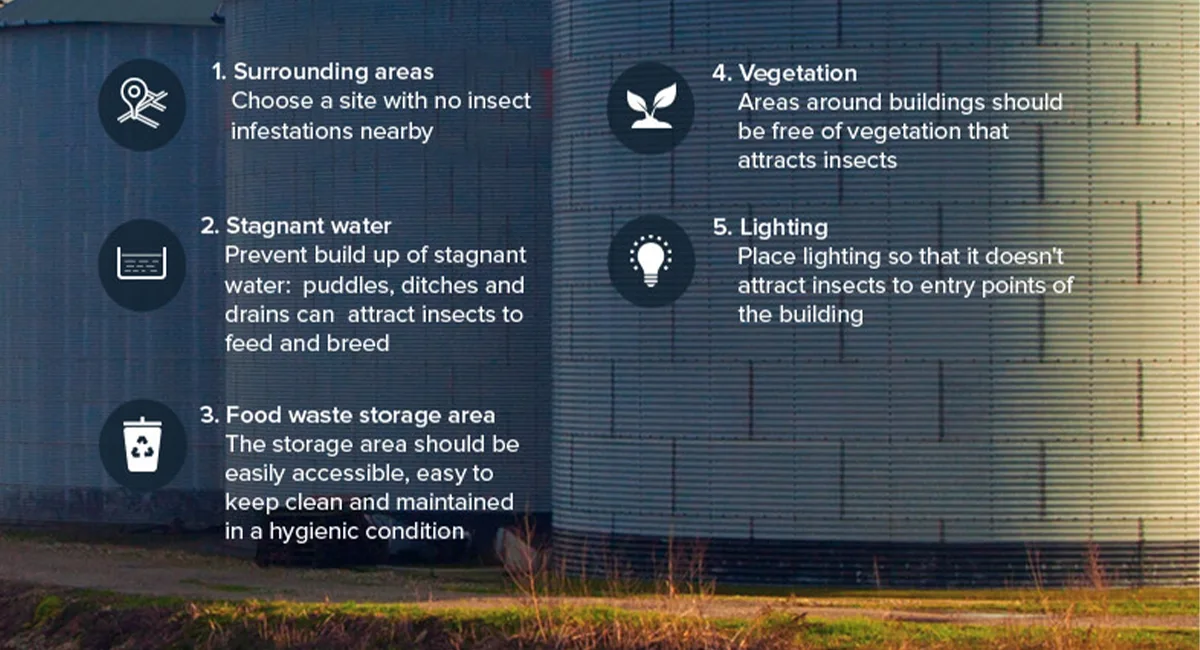
Securing buildings from stored product insect pests starts with the exterior. Food plant sites must be located and designed to prevent pests from accessing the plant, being attracted to it and finding conditions favourable for sheltering or breeding on the site. These are the main features to consider in choosing where the where the facility is located:
Large, complex buildings can provide many places and features that are favourable for stored product insects to hide or gain access to the inside if details are not designed to specifically prevent them.
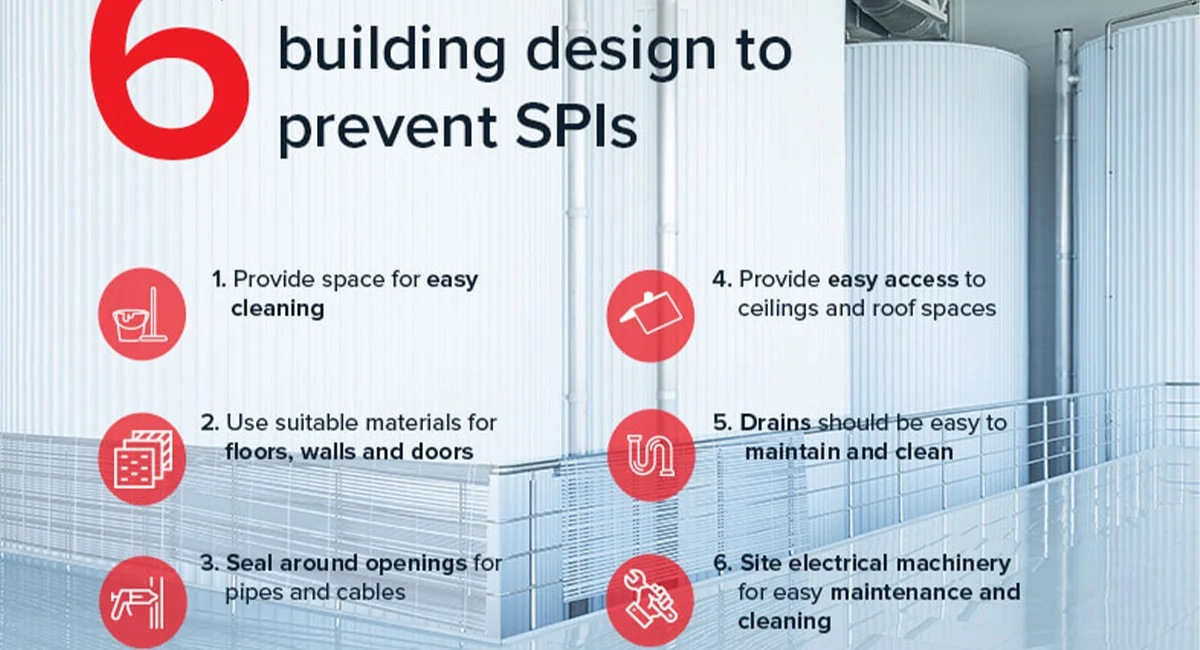
The basic principle is to prevent the supply of food, water and shelter for insects, which requires a combination of design, maintenance and standard good practices for food hygiene.
One of the last lines of defence in a food facility is to eliminate insects that get into the building without contaminating any food products. Effective fly control, including commercial fly control, such as electric fly killers, is an efficient way to attract and safely contain any flying insects. Rentokil’s Lumnia Ultimate electric fly killer is designed for larger facilities such as food processors and warehouses. It features specially designed UV LED bulbs that are highly attractive to insects, which are captured inside the unit using glueboards and safely contained there.
When a customer came to us to solve a persistent problem with biscuit beetles (also called drugstore beetles, Stegobium paniceum), our local field biologist installed two Lumnia Ultimates. In just five days, the units had captured an astonishing number of the beetles, as shown in the photo below of the glueboards inside one of the units on the site. This demonstrates that the beetles are highly attracted to the LED UV bulbs. Proper fly control measures, such as fly extermination and fly pest control, are essential components of maintaining the hygiene and safety of food facilities.
Find out more about the Lumnia range of fly killers …
Food hygiene regulations in all developed countries require food businesses to have adequate measures to maintain food hygiene and prevent contamination. These procedures should be based on Hazard Analysis and Critical Control Point (HACCP) principles — HARPC in the US regulations. Pest control is a component of Good Manufacturing Practices, which are prerequisites for carrying out HACCP procedures.
Find out more about Rentokil’s professional pest control services and technologies for the food processing sector
Technology and data-driven digital pest monitoring for effective, smart pest management solutions