myRentokil
Manage your business
A swarm of flying insects is probably a positive sign of a termite infestation for you. However, those swarming insects hovering in your home might be termites or some other flying insects. It can range from flying ants, midges, mosquitoes, flies or even flying termites, or also known as swarmers.
As the weather change approaches, you may start to find some winged insects. They could either be flying ants or flying termites that are looking to build new colonies, often finding their way into your homes.
How can you tell the difference between the two? Why does telling them apart matter anyway? Continue reading to find out.
There are at least four key differences between flying ants and termites.
Found flying Termites? Rentokil offers 99% proven effective termite control solution with a 1-year warranty.
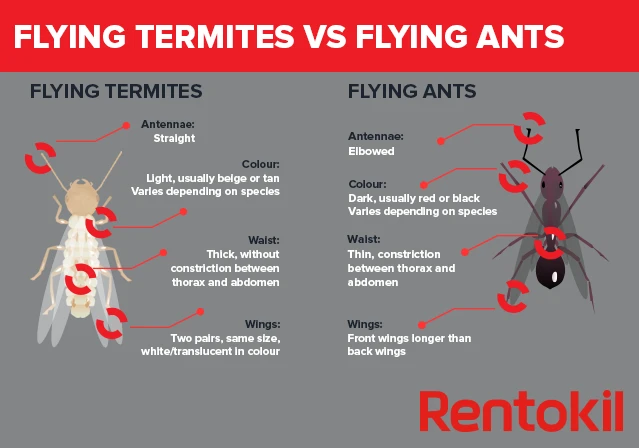
Firstly, flying ants have bent antennae, pinched waist, and two sets of wings, of which the front set is larger than the other has. Secondly, termites have straight antennae, broad waist, and two wing sets of equal size. Thirdly, termites shed their wings readily onto the ground that is not the case for ants.
Both flying ants and termites have wings and a similar body structure, but there are some key differences in their appearance. One of the most noticeable differences is that termite wings are equal in size, while the front wings of flying ants are larger than their hind wings. In addition, termite wings are more rounded and translucent, while flying ant wings are more veiny and opaque.
Another difference is in the shape of their bodies. Termites have a straight waist with a broad, rectangular head, while ants have a narrow waist and an elongated head with distinct mandibles.
The table below further illustrates the significant differences between the appearance of termites and ants.
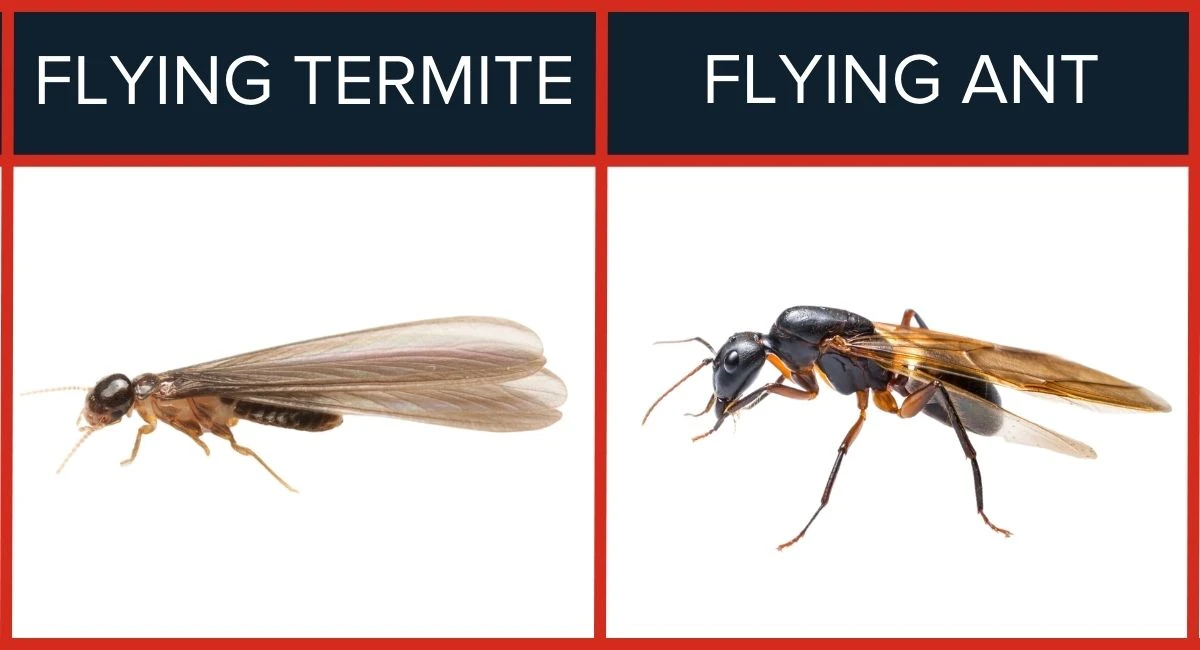
In addition, there are various types of termite species. They are namely, Subterranean Termites, Drywood Termites and Dampwood Termites.
Subterranean and Drywood termite infestations often occur in homes in Hong Kong. Subterranean termites feed on wood, live in the ground and require moisture to live. These mighty pests require a connection or a link from the ground to build their nests to travel. This also explains why termite infestation can spread upwards in a home to few stories high.
Drywood Termite associates with homes with high humidity and a huge presence of wood. They live within the wood and infest items such as furniture, cabinets, doorframes or panels. Hence, their diet comprises hard and softwood, usually going for grains along the wood items.
The lifecycle of flying ants and termites is similar in some ways, but there are also significant differences. Both species have a winged reproductive stage where they emerge from their colonies during mating season. After mating, the fertilized females establish new colonies and become the queen of the colony, laying eggs that hatch into larvae.
However, the larvae of ants and termites have different development processes. Ant larvae are fed a mixture of regurgitated food and secretions from adult ants, while termite larvae are fed a specialized diet of protozoans and other microbes that help break down cellulose.
In addition, termites undergo a process called molting, where they shed their exoskeleton and grow a new one. The larvae molt several times before developing into different castes, including workers, soldiers, and reproductive termites. Ants, however, do not undergo molting and develop into different castes based on their size and age.
Check more about termite and ant species:
While both flying ants and termites have the potential to cause damage to homes and buildings, termites are generally considered to be more destructive.
Termites feed on cellulose-based materials such as wood, paper, and insulation, and can cause significant structural damage if left untreated. Termites are responsible for billions of dollars in property damage each year.
Flying ants, on the other hand, are not known for causing structural damage to homes and buildings. While they can be a nuisance and may bite or sting if provoked, they are not typically considered a serious threat.
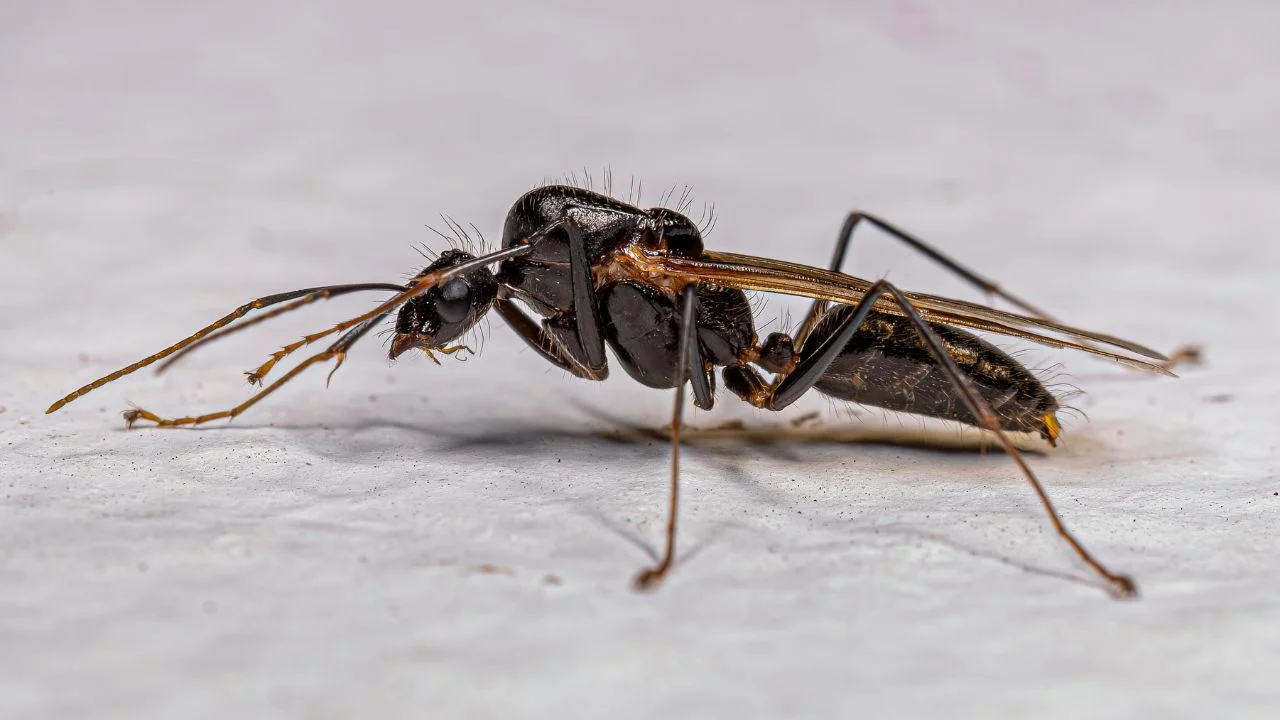
Carpenter ants are large ants that can be mistaken for termites because they may have wings during mating season. However, unlike termites, carpenter ants do not eat wood. Instead, they excavate tunnels in wood to create their nests.
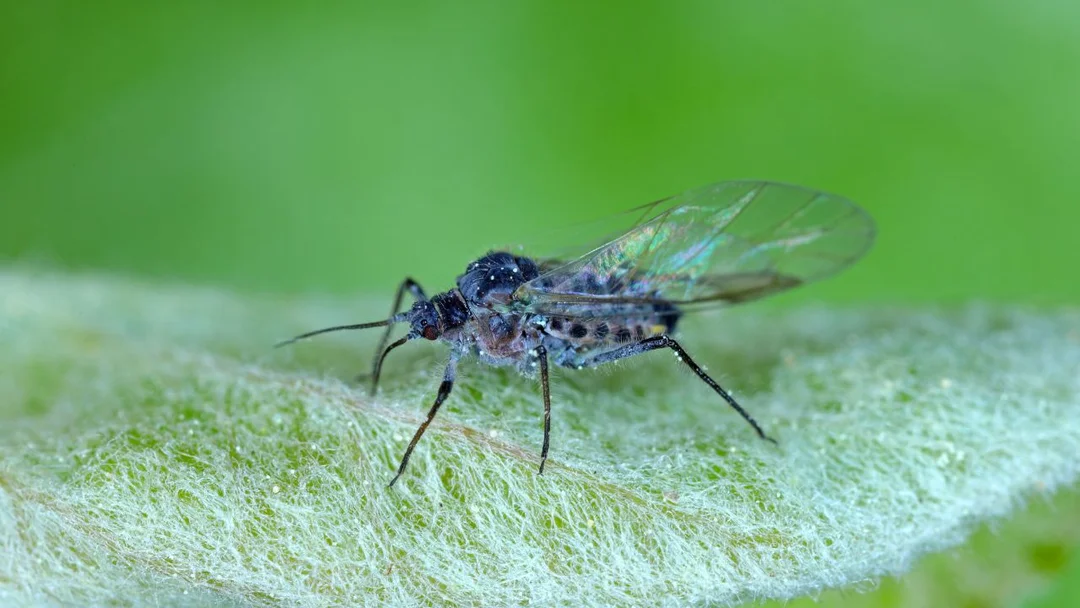
Winged aphids are small, soft-bodied insects that may be mistaken for flying ants. However, they have a distinct head and thorax, while ants have a pinched waist. Aphids also have two pairs of wings that are different in size, while ant wings are similar in size.
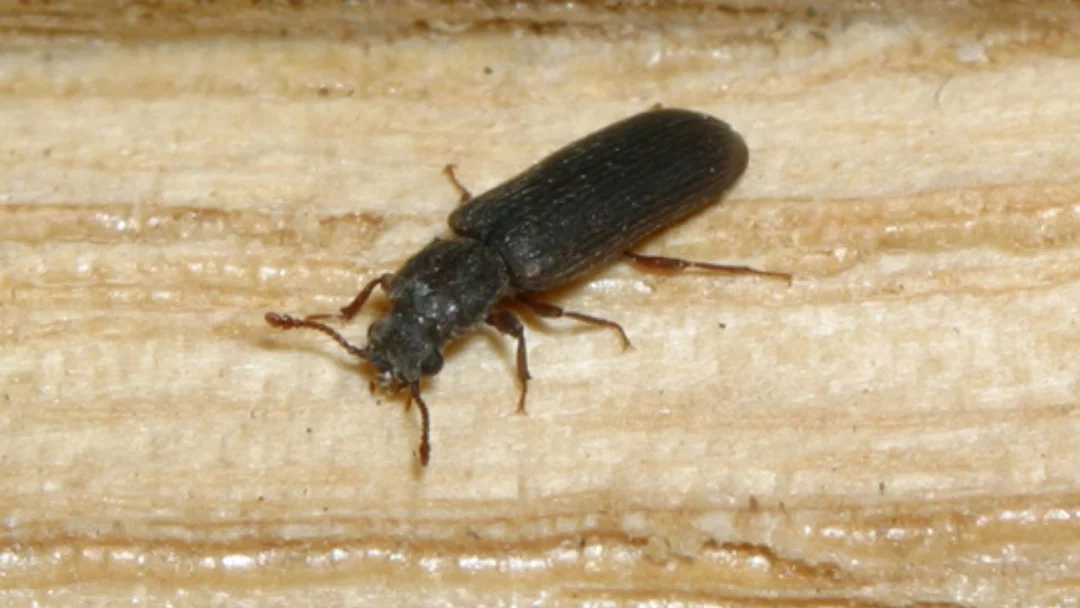
Powderpost beetles are small, reddish-brown beetles that may be mistaken for flying ants or termites due to their appearance and behavior. They feed on hardwood and can cause significant damage to wooden structures.
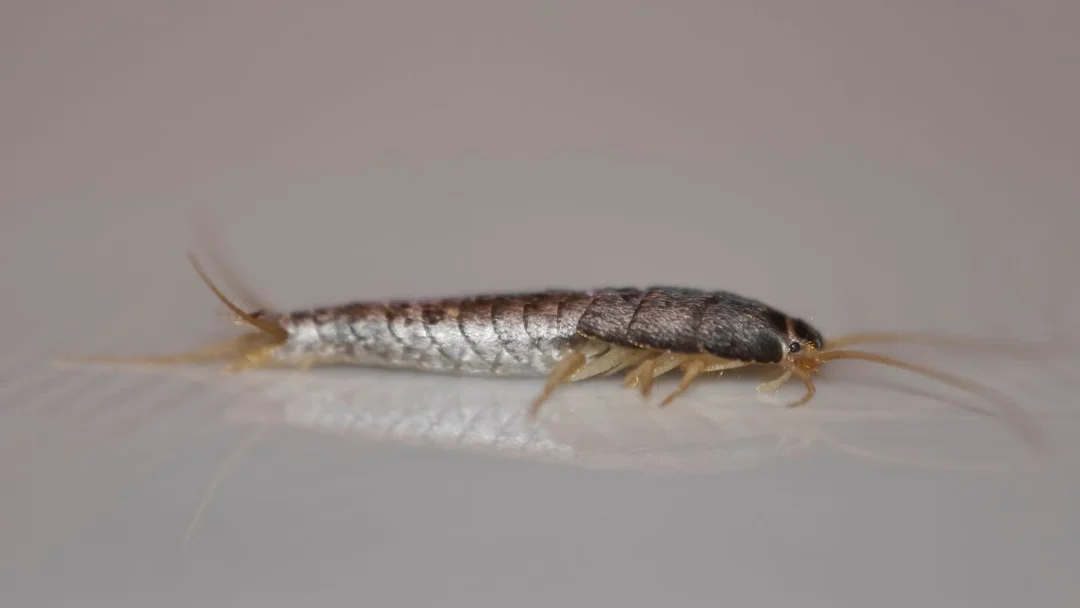
Silverfish are small, wingless insects that may be mistaken for flying ants or termites due to their similar size and shape. However, they have a distinct body shape with a tapered abdomen and long antennae.
There are many factors with the sudden appearance of winged insects in your home. You should never downplay the possibility that they are flying termites or ants that are out looking for a place to start a new colony.
Confusing flying termites with flying ants is one thing and with other flying insects such as midges or fruit flies, is another. It is so easy to make that mistake, unless you are a pest control specialist. Only by identifying which pests are present that you would be able to outline the necessary steps to protect your home.
These also illustrate why your best protection would be engaging the help of a pest control professional. Accurate pest identification is important because of the following:
Our pest control specialists at Rentokil Hong Kong are trained to distinguish termites from ants and provide the necessary treatment to eradicate them from your home, whether it is professional termite treatment or ant control.
Our integrated termite pest control solution includes monitoring and baiting, as well as using liquid termiticide that is effective in treating both an existing problem and preventing any potential termite infestations in the future. Different types of termite treatments have different applications, costs and time required.
We use the world's first termite detection radar device that can effectively penetrate any building surface to avoid ineffective drilling and nuisance.
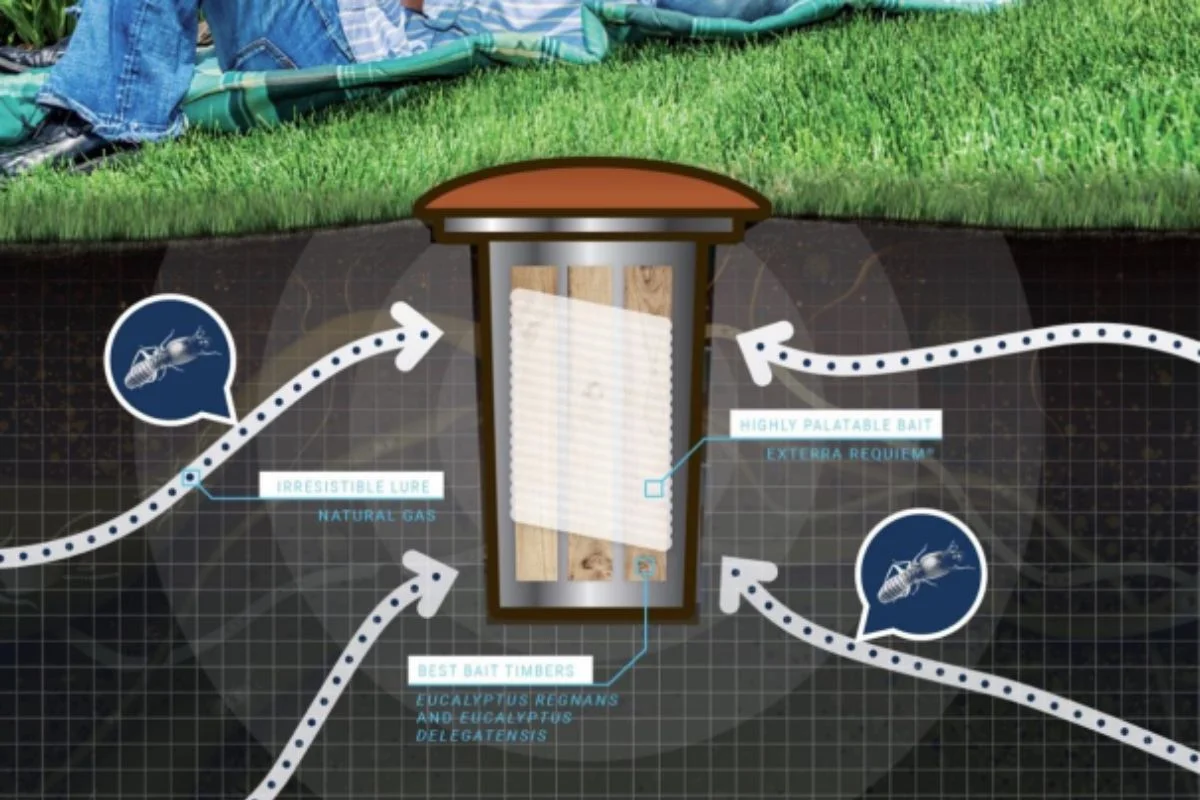
We use the Australian patented termite bait system (Exterra Baiting System), which is effective in both preventing termites from entering the house and eliminating termites that have already entered the house. The bait system can reach the termite burrow and kill the termite colony at the root, without toxic side effects, and will not cause harm to family and pets.
Apply liquid insecticide under the foundation or concrete floor around the house to form a solid barrier to prevent termites from invading.
For homeowners who is engaging termite solutions for the first time, here is a termite control 101 guide to download for free. It includes critical questions such as:
We also offer effective solutions to get rid of ants through our professional ant pest control solution for both indoor and outdoor areas. Our treatments target specific species to ensure a fast and effective solution to remove ants in your property.
Rentokil Initial is your pest control and hygiene expert with over 60 years of experience in protecting the health of Hong Kong people and is the first choice for commercial and residential pest control services.
Complete the "Contact Us" form on the website or call +85229546888
Every time we receive your pest control needs, we will call you for details and arrange on-site inspections depending on the situation
Experienced and professionally trained service technicians are at your service
Over 50 years of experience protecting Hong Kong homes and businesses from termites