myRentokil
Manage your business
In this blog, the experts at Rentokil take a look at termites, answering some termite FAQ's and offering some expert tips on how to protect your property this rainy season.
Now that the weather has warmed and the rain has started in Hong Kong and Macau, you're more likely to notice flying ants and termites around your house. But when it comes to home pest control and termites, it's important not only to spot the problem (such as looking out for termite damage) but to stop it from getting worse.
Termites are a species of wood-boring insects: this means that they attack the wood in your property, which weakens the structure of your home. Even properties built primarily of brick or stone can still suffer from termite damage.
This is because structural supports - as well as other building components - are constructed of wood and other cellulose-based materials; the substances on which termites like to feed. Termites have symbiotic flagellates (or bacteria) in their hindguts that enable them to break down plant cellulose to a digestible form.
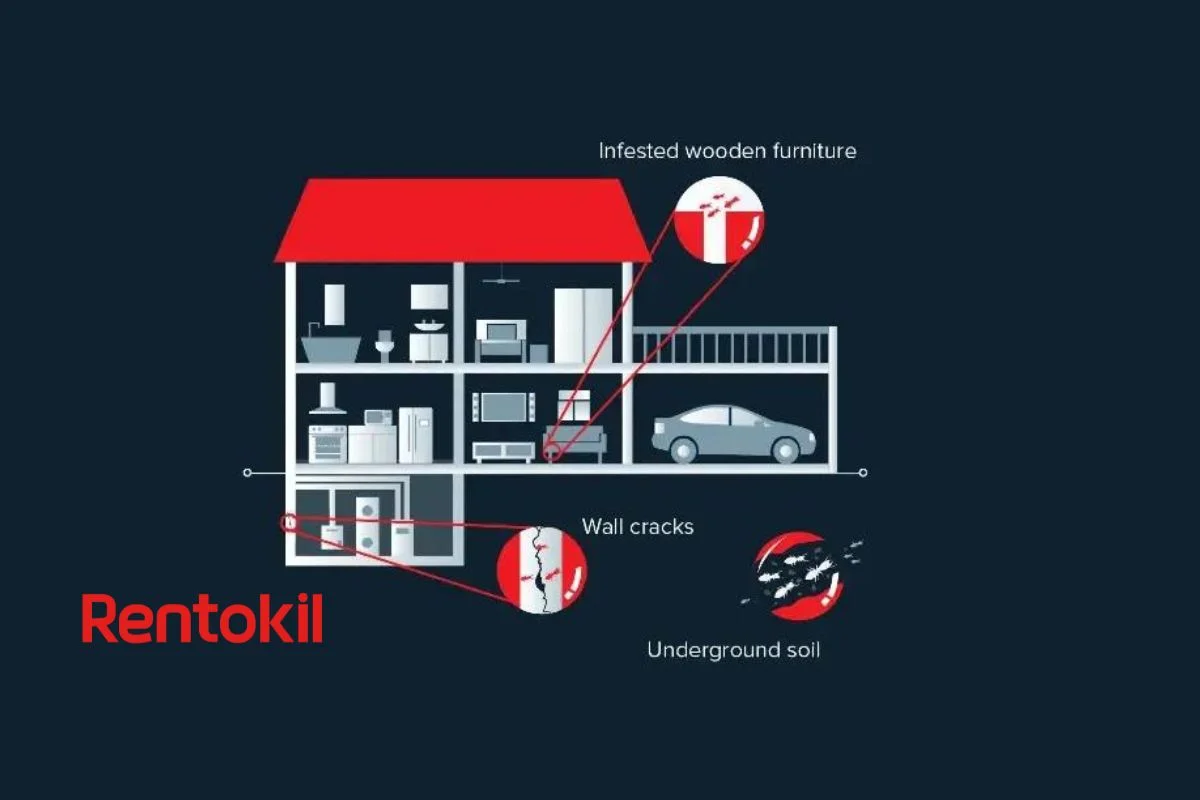
A termite infestation can be really hard to spot. Termites live underground and eat away at wood from the inside. Termite damage can therefore run into millions of dollars as they can steadily eat away at the structure of your home for years without any obvious signs to alert you to the damage they are causing.
Learn more about Common signs of termite infestation
When you consider that untreated termite damage can cause your house to become structurally unstable, it’s no wonder that termite damage is so costly, and that termite control is so important.
Rain helps make the environment more wet, which in turn makes termite survival more likely since there is plenty of water available.
After a soaking spring rain, thousands of winged reproductives may swarm from the colony seeking to mate and start new colonies. However, the rain is not the trigger for swarming so much as warm temperatures, humidity and the age of the colony itself.
No, even though termites are most visible in the spring when they swarm, they can damage your property all year-round.
Swarmers, also known as the "reproductives" of the colony, are termites that come out each year to start new colonies. They usually leave the nest in the spring, after a good rainfall.
Colonies do not typically start producing swarming termites until the colony is fairly mature and has more than likely been established for a while. If people see a swarm of termites inside their home, that could be a sign that termites have been there for at least five to seven years.
A crucial step in protecting your property from these relentless, munching pests is to know what to look for. Many people confuse termites with ants, with termites sometimes being called ‘white ants’ or ‘flying ants’. Ants, like wasps, have a constriction half way down their body, whereas in termites the body is uniformly broad.
To know more about the difference and similarity of flying ants and termites
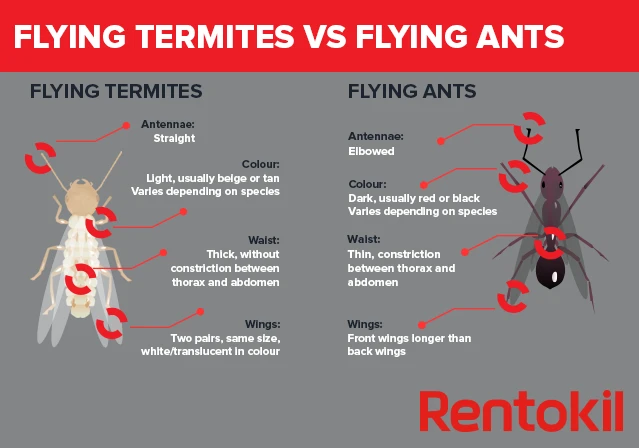
Although termite Swarmers and flying ants can be easily confused, homeowners should not assume swarms are groups of flying ants. This is a good example of why it is important to partner with a professional pest management company. They can help you determine what type of pest you have and develop a customised treatment plan.
At Rentokil, our experts often hear the following from homeowners “I don’t see any signs of termites, so do I need to worry about a preventive plan?” Our response to this is that the warning signs can be subtle and often go unnoticed until structural damage has already occurred.
Signs of an infestation can include termite swarms, mud tubes and piles of discarded wings. After the termites swarm, which is typically during warm spring days, they can shed their wings and leave piles of them behind. Anywhere around your home where it is in contact with the soil can be a potential termite entrance.
To know more about how to prevent termite from infestation?
Termites need two things to survive: wood and moisture (why is why they come out after the rain) so minimizing access to both of these is a good start in protecting your home.
Whilst it is always best to get a professional pest control company in to do a termite inspection, our experts advise that there are a few practical tips that you can employ to implement termite protection for your homes:
Wood that directly touches soil gives termites easy access to your property, so regular inspection of the following may help to spot early signs of termites:
A seemingly small leak can create perfect moisture conditions for termites. Whenever possible, try to fix the following, which may discourage termite activity around your property:
Want more insights into how termites can affect your business? Download our Pest Control 101 guide: Understanding Termites in your Business.
Complete the "Contact Us" form on the website or call +85229546888
Every time we receive your pest control needs, we will call you for details and arrange on-site inspections depending on the situation
Experienced and professionally trained service technicians are at your service
Rentokil Initial is your pest control and hygiene expert with over 60 years of experience in protecting the health of Hong Kong people and is the first choice for commercial and residential pest control services.
As low as $50 per day to keep you from viruses including Corona-virus, flu and RSV
Over 50 years of experience protecting Hong Kong homes and businesses from termites