PestNetOnline login
Find out more© 2026 Rentokil Initial plc Bản quyền thuộc Tập đoàn Rentokil Initial và tuân thủ pháp luật.
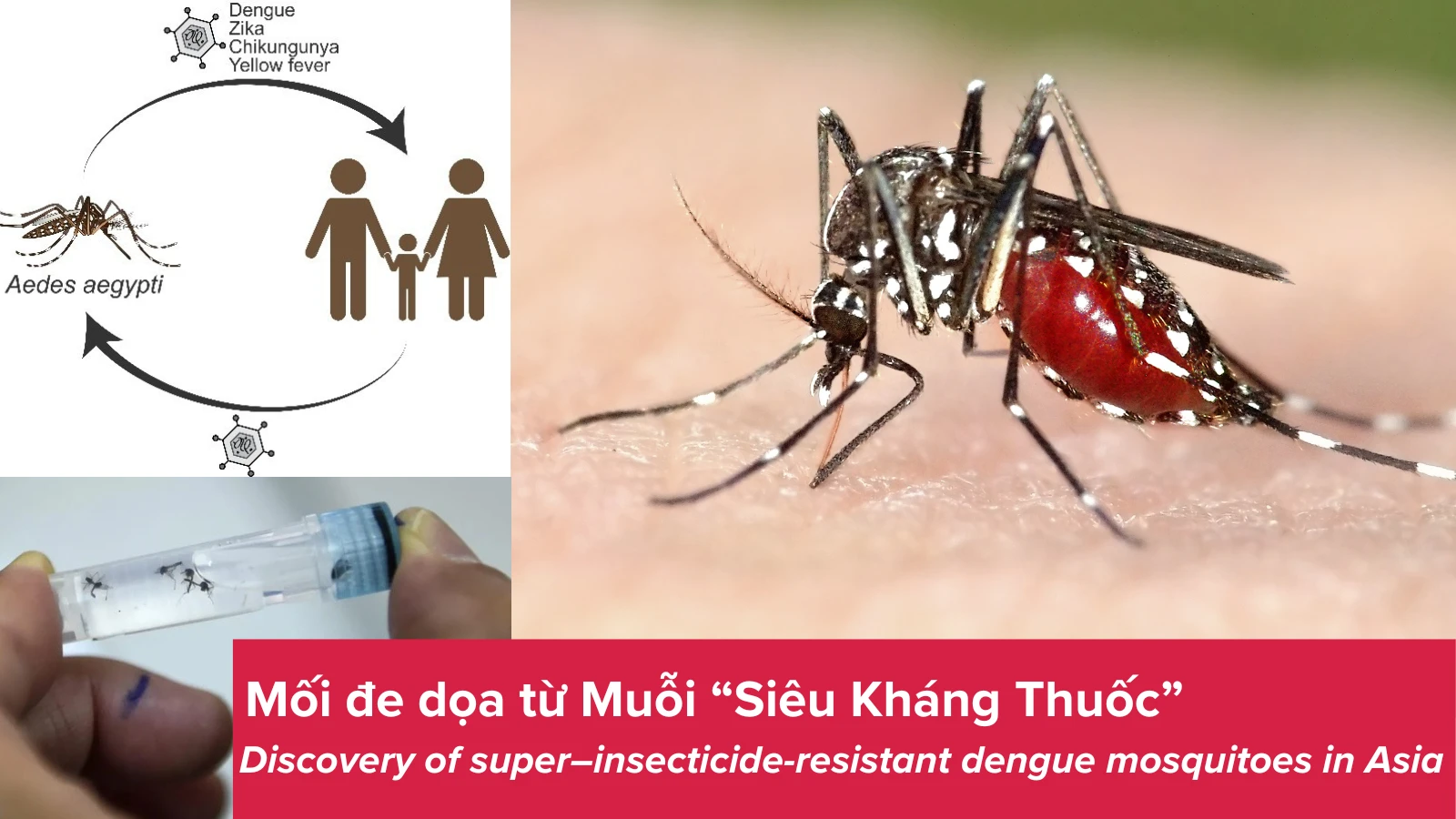
The warning comes after the team found a new genetic mutation that makes Aedes aegypti mosquitoes - also known as yellow fever or dengue mosquitoes - more resistant to common insecticides.
Aedes aegypti mosquitoes are known as a vector of the Zika virus, as well as yellow fever and dengue fever.
More than 80% of Aedes aegypti mosquitoes in Vietnam and Cambodia were found to have this genetic mutation, necessitating review of mosquito control methods and increased caution about a proliferation of insecticide-resistant mosquitoes.
The team led by the Department of Medical Entomology at Japan's National Institute of Infectious Diseases collected mosquitoes in Vietnam and elsewhere and examined how they were resistant to commonly used "pyrethroid" insecticides.
The study showed that even when the concentration of insecticides was raised to 10 times the level that can kill ordinary mosquitoes, about 80% of mosquitoes collected in Hanoi survived.
Between 78% and 99% of mosquitoes in three cities -- Hanoi in the north of Vietnam and Ho Chi Minh City in the south, as well as the Cambodian capital Phnom Penh across the border -- had this genetic mutation.
Health authorities commonly fog mosquito-infested areas with clouds of insecticide, and resistance has long been a concern, but the scale of the problem was not well understood.
Japanese scientist Shinji Kasai and his team examined mosquitos from several countries in Asia as well as Ghana and found a series of mutations had made some virtually impervious to popular pyrethroid-based chemicals like permethrin.
"In Cambodia, more than 90 percent of Aedes aegypti mosquitoes have the combination of mutations that results in an extremely high level of resistance," Kasai told - director of the Department of Medical Entomology at Japan's National Institute of Infectious Diseases.
He found some mosquito strains had 1,000-fold resistance, compared to the 100-fold seen previously.
That meant insecticide levels that would normally kill almost 100 percent of mosquitoes in a sample killed only around seven percent of the insects.
Even a dose 10 times stronger killed just 30 percent of the super-resistant mosquitoes.
Dengue can cause hemorrhagic fever and infects an estimated 100 to 400 million people a year, although over 80 percent of cases are mild or asymptomatic, according to the World Health Organization.
Several dengue vaccines have been developed, and researchers have also used a bacteria that sterilises mosquitoes to tackle the virus.
But neither option is yet close to eradicating dengue, and Aedes aegypti mosquitoes carry other diseases, including zika and yellow fever.
The world has used many types of toxic insecticides (including mosquitoes) such as organochlorine group because they persist for a long time in the environment. But they are very toxic and cause cancer, they have been banned in most countries in the past 30 years. Organophosphorus group has high acute toxicity to warm-blooded animals and lasts for a long time, so many substances are banned; Carbamate group has high acute toxicity to warm-blooded animals, Neonicotinoid group is toxic to beneficial insects, such as honeybees...
In 1924, Hermann Staudinger (1881-1965), a German chemist, and Ruziofa discovered Pyrethrin I extracted from the Chrysanthemum flower. Since then, a series of substances called Pyrethroids were born and by 1983, they were widely used, with a market share of about 25% of the world's insecticides and are currently used very commonly. For humans, the Pyrethroid group is considered the "healthiest" among the groups of insecticides that also have many toxic effects. If exposed too much, it will cause headaches, excessive salivation, vomiting, muscle weakness, and in the worst cases, it can cause heart attack or acute respiratory failure and trigger brain stroke or seizures; causes heat, itching, burning, and numbness on exposed skin.
People have known about insecticide-resistant in insects since 1946 because of the Culex tritaeniorhynchus mosquito (which transmits type B encephalitis, filariasis...). In the following years, this situation appeared in Italy, Venezuela, America, Russia... In 1946, there were only 2 species of malaria-transmitting mosquitoes (Anopheles - there are about 60/400 species that transmit malaria parasites) that were insecticide-resistant. But by 1991, there were 55 species that can resist to one or more chemicals.
In 1992, the World Health Organization announced that 72 species of mosquitoes were resistant to chemicals. Chemical resistance of mosquitoes is increasing. In 2000, there were about 100 species of mosquitoes that can resist to chemicals!
This phenomenon is spreading rapidly and it is the consequence of using too many insecticides!

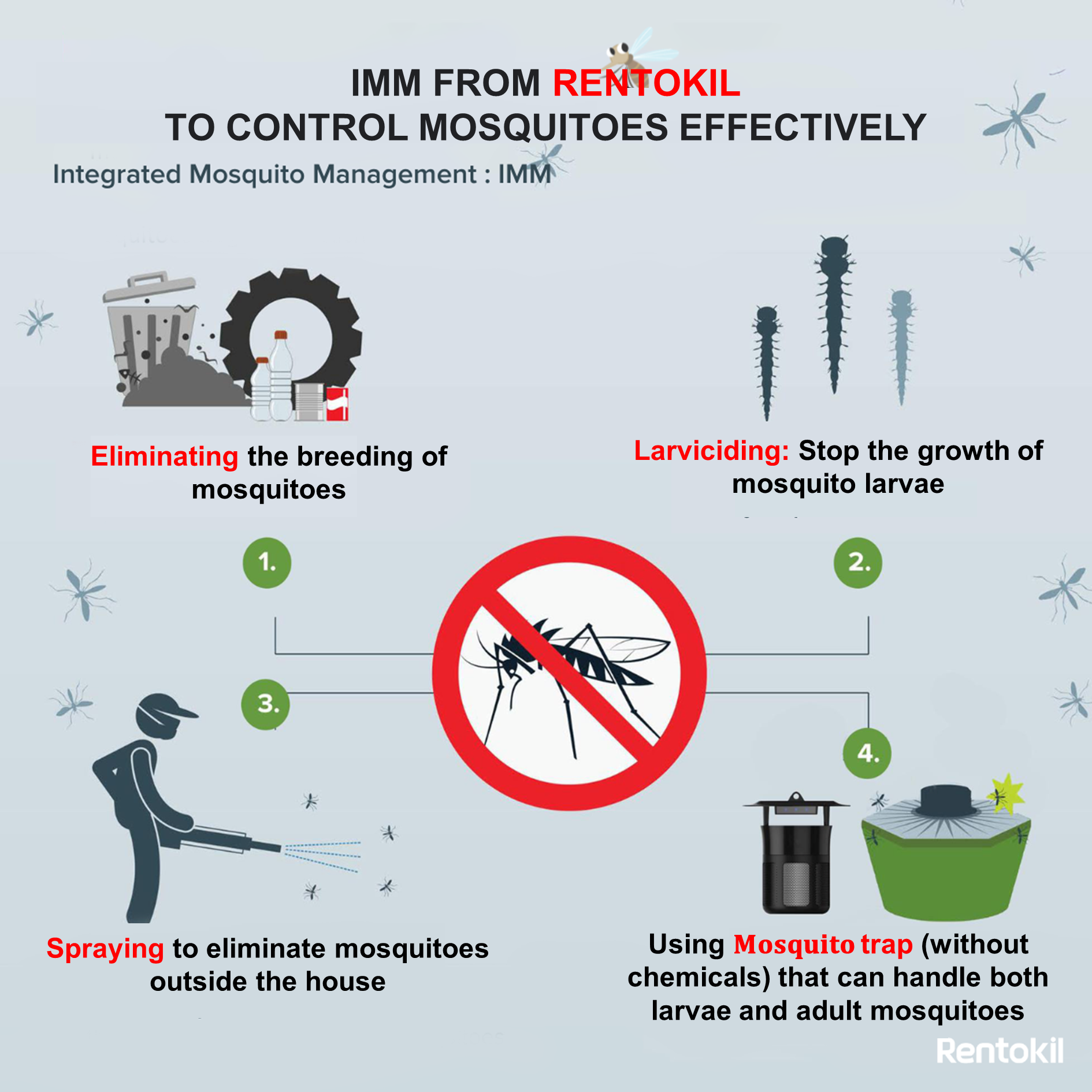
Larviciding:
Adult Mosquito Trap: Biogents, Mosclean
Do you need a professional solution for your pest control problem? Call Rentokil Vietnam today at 1800 54 54 83 or inbox us.