PestNetOnline
Login© 2026 Rentokil Initial plc and subject to the conditions in the Legal statement
Subterranean termites are the most destructive termite species in the United States. They build underground colonies, access structures through mud tubes or soil contact, and feed inside wood—typically causing significant structural damage before any visible sign appears.
For commercial properties, that means unbudgeted repair costs, compliance exposure, and operational disruption that standard commercial property insurance rarely covers. Treatment depends on species, activity level, and building type; liquid soil applications and in-ground baiting systems are the primary options.
Table of Contents
Subterranean termites are soil-dwelling insects that build their colonies underground and require continuous contact with soil moisture to survive. Unlike drywood termites, which nest within the wood they eat, subterranean termites live in the soil and travel to wood sources through mud tubes—narrow tunnels they construct from soil and saliva along foundation walls, floor joists, and support beams.
The most common species in the continental U.S. is Reticulitermes, present in every state except Alaska. The Formosan subterranean termite (Coptotermes formosanus) is established in the Southeast and Hawaii and is notably more aggressive—colonies can number in the millions, compared to the tens of thousands typical of native species.
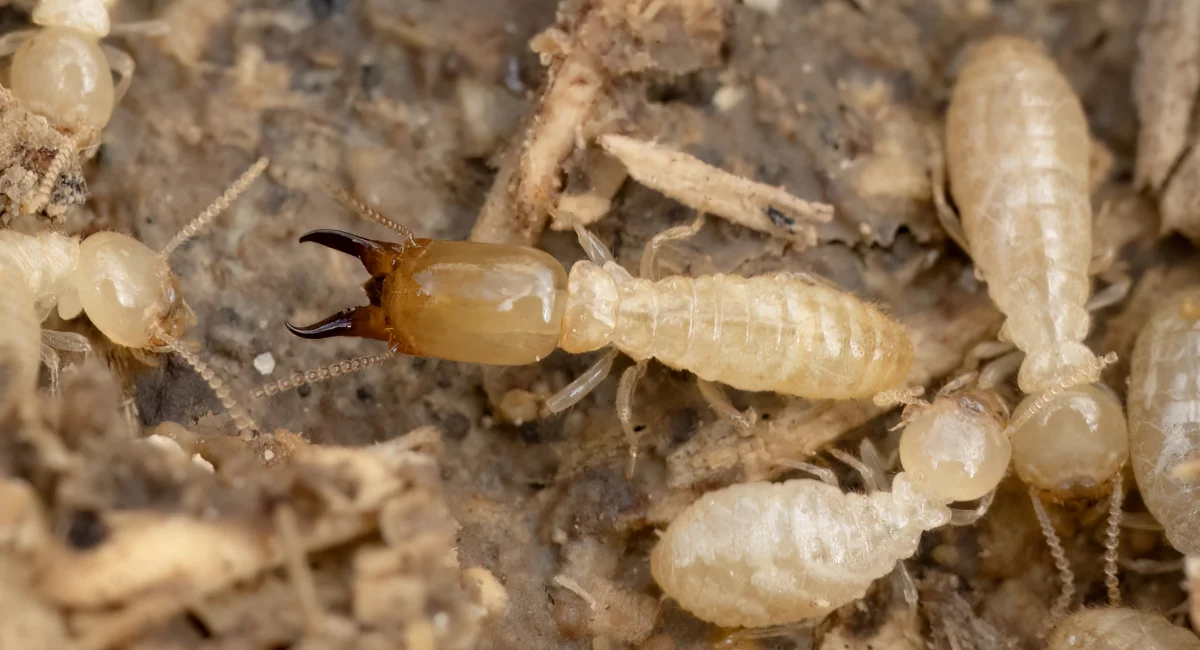
All subterranean termite colonies include three castes: workers, soldiers, and reproductives. Workers are the feeders responsible for structural damage; they're rarely visible because they avoid open air and light. Soldiers defend the colony and are identifiable by their enlarged, rectangular heads. Reproductives—called swarmers or alates—are the winged termites that emerge seasonally to establish new colonies.
Subterranean termites are most often identified by caste:
Workers are cream to pale white, 1/8 to 3/8 inch long, soft-bodied, and wingless. They are the primary cause of structural damage and the caste least likely to be seen exposed in open air.
Soldiers are similar in size and color to workers but have enlarged, elongated heads and strong mandibles. When a mud tube or gallery is disturbed, soldiers will briefly emerge at the breach.
Swarmers (reproductives) are dark brown to black, 3/8 to 1/2 inch long, with two pairs of equal-length wings. Swarmers are the termites most commonly observed by building occupants, typically in spring near light sources.
Subterranean termites vs. flying ants: These two are routinely confused. The distinctions are consistent. Termite swarmers have straight antennae, equal-length wings, and a broad, unsegmented waist.
Flying ants have elbowed antennae, unequal wing pairs, and a pinched waist. Finding discarded wings near windowsills or doors is a reliable indicator that swarmers were present.
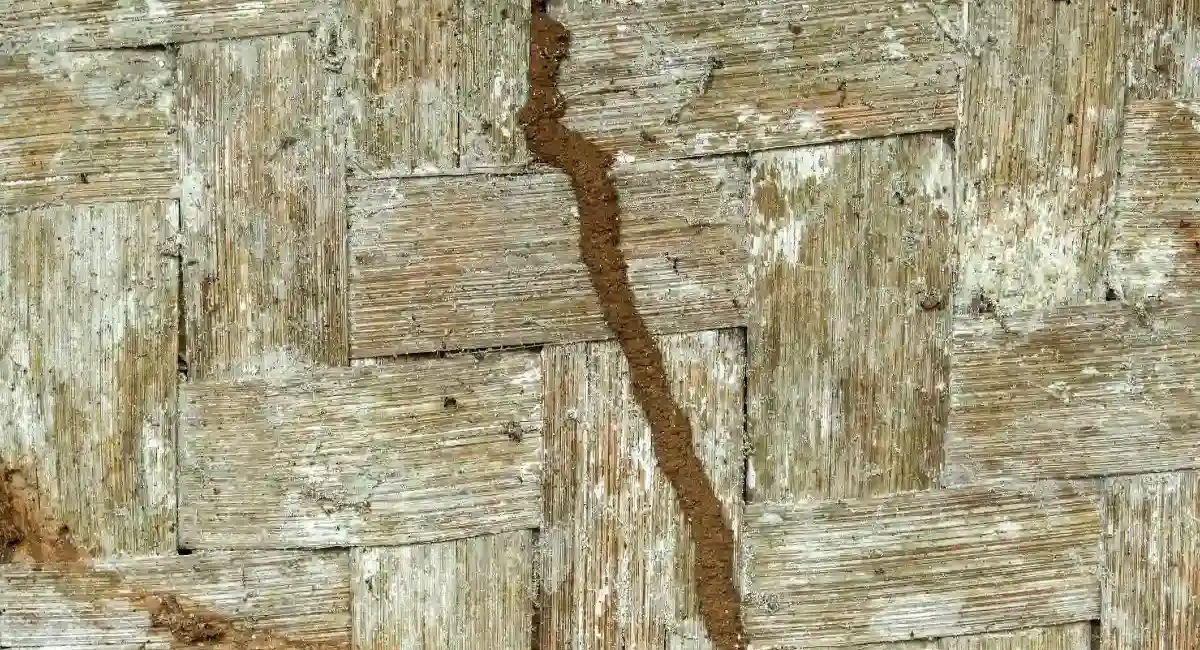
Mud tubes are the most definitive sign. Subterranean termites build these pencil-width tunnels to travel between soil and wood without exposure to open air and light. In commercial structures, look for them along foundation walls, crawl space piers, floor joists, wall studs, mechanical rooms, and utility penetrations.
Active tubes contain live termites. Inactive tubes are dry, brittle, and crumble when disturbed. If you break a section of tube and return in 24–48 hours to find it rebuilt, the colony is active.
Other signs to look for:
The point of discovery is rarely the center of the infestation.
Mud tubes on an exterior wall or swarmers near a window typically mark the endpoint of a feeding trail, rather than its origin. The structural damage is often deeper in the building.
Subterranean termites feed on cellulose—the structural component of wood. In commercial buildings, they target floor joists, wall studs, subflooring, and any wood in proximity to soil. Because they feed from the inside out and rarely break the surface, an infestation can remain undetectable for several years in facilities without active monitoring programs.
The structural consequences depend on where the activity is concentrated. Termites feeding on load-bearing floor joists may weaken the floor system. Activity in wall cavities can compromise framing integrity. In crawl spaces with inadequate moisture management, combined moisture damage and termite feeding can lead to significant damage to the floor system.
Beyond structural repair, commercial properties face additional operational consequences. Visible pest activity can affect tenant relationships, guest experience, and inspection readiness. For facilities in regulated industries—food processing, healthcare, hospitality, multi-family housing—documented termite activity can trigger audit findings, occupancy concerns, or service disruptions that can compound the cost of the infestation itself.
Standard commercial property insurance policies typically exclude termite damage, classifying it as a preventable maintenance issue rather than a covered loss. Repair costs come directly out of operating budgets.
Prevention targets the two conditions subterranean termites require: soil access and moisture.
Structural and site measures:
These measures reduce risk but cannot eliminate it. Subterranean termite colonies forage widely—workers can travel more than 100 feet from the colony—and building modifications alone cannot close every access point. For commercial properties, a reliable long-term approach combines structural maintenance with a professional monitoring program that detects forager activity.
Scheduled professional inspections should be implemented for commercial property management, particularly in high-risk regions or for facilities with crawl spaces, wood-frame construction, or ground-level wood components.
Three primary treatment methods address subterranean termite infestations. The appropriate choice depends on the species, the activity level, and the building's construction type.
A liquid termiticide is applied to the soil around and beneath the foundation, creating a treated zone that termites pass through without detecting. Contact transfers the active ingredient between termites, spreading through the colony over time. Liquid treatment provides quicker protection and is a commonly used method for active subterranean infestations in commercial structures.
Monitoring stations are installed in the soil around the building's perimeter. Once termite activity is detected, stations are loaded with a slow-acting bait that workers carry back to the colony and share with other members, including reproductives. Baiting systems are lower-impact and work well in commercial settings where drilling or trenching would disrupt operations or damage finished surfaces. They require ongoing monitoring and station maintenance.
Liquid treatment and baiting systems are sometimes deployed together. Above-ground bait stations can also be added when active interior trails are identified and targeted intervention is needed.
The species present and the extent of activity determine the appropriate approach. A professional inspection establishes both before any treatment is applied.
Any visible mud tube, active swarmers, or hollow-sounding structural wood warrants a professional inspection immediately. Subterranean termites are not a self-resolving problem, and facility-level self-inspection has real limits. Activity in wall cavities, beneath concrete slabs, within framing above drop ceilings, and in crawl space systems is not reliably detectable without training and appropriate tools.
For commercial properties, the case for professional management goes beyond structural protection. Visible pest activity can affect tenant confidence, guest experience, and inspection outcomes. A documented inspection and treatment program is what most regulatory bodies and commercial insurers expect when pest management is part of a facility's operational baseline. In regulated industries—food service, healthcare, lodging, multi-family housing—it is often a compliance requirement.
Rentokil® experts assess commercial buildings as complete systems—foundation, crawl space, wall cavities, structural framing—and provide documented treatment records that support compliance reporting and operational continuity.
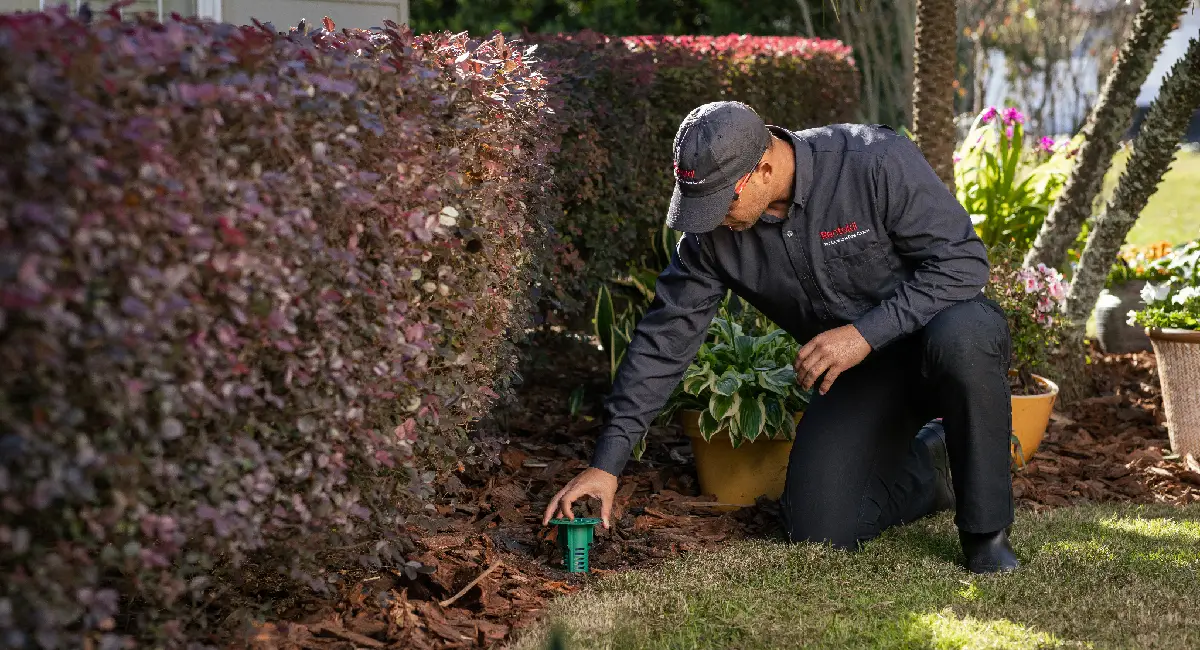
Subterranean termite activity is rarely confined to where you first notice it. Rentokil experts inspect commercial properties as complete systems—foundation, crawl space, wall cavities, framing—and provide documented treatment programs matched to your building's construction, your industry's compliance requirements, and the specific species present.
Contact your local Rentokil office or call 1-855-633-6260 to schedule a commercial inspection.
Damage rate depends on colony size, species, moisture levels, and wood type. Formosan subterranean termites cause damage more quickly than native Reticulitermes species due to significantly larger colony populations. The more significant practical concern for commercial properties is detection lag: infestations can go undetected in facilities without active monitoring, by which point structural repairs can be more involved, more expensive, and more disruptive to operations.
Subterranean termites nest in soil, require moisture to survive, and access structures through mud tubes or soil contact. They feed along the wood grain, leaving a honeycomb-like internal pattern. Drywood termites nest directly within the wood they infest, require no soil contact, and are typically found in attics, window frames, and wood furniture or fixtures. Drywood infestations are usually smaller and more localized; subterranean infestations can involve large colonies foraging across a wide area of a structure. Treatment methods differ—subterranean infestations are addressed with soil treatments and baiting systems; drywood infestations may require fumigation or localized spot treatment.
Subterranean termites are present in every U.S. state except Alaska. The highest-risk regions for commercial properties are the Southeast, Gulf Coast states, Hawaii, and California, where warm, humid conditions support larger colonies and year-round foraging activity.
One reliable field test: break a section of a mud tube and return in 24–48 hours. If it has been rebuilt, the colony is active. An open, dry breach suggests a dormant tube. Live termites visible inside a gallery when disturbed confirm current activity. Discarded swarmer wings indicate a recent swarm—a sign of a mature colony at reproductive capacity. A professional inspection can confirm activity status, identify the species, and assess the full scope of the infestation across the building.
Standard commercial property insurance policies typically exclude termite damage. Insurers classify it as a preventable maintenance issue rather than a sudden or accidental loss. This means structural repair costs come directly out of operating budgets, not covered claims. For multi-site portfolios, the financial exposure compounds: an undetected infestation across several properties can represent a significant unbudgeted capital expense. Proactive termite management is a standard cost of property protection, not an optional line item. To confirm your coverage, check your insurance policy.