myRentokil
Manage your business
Monitoring is key if you want to avoid problems with bees and wasps, especially if you know the area you are occupying has this pest problem. It is always easier to prevent a problem before it happens, rather than to wait for them to invade your home or garden.
To locate the nest, watch the flight path of returning wasps. If the nest is the near the home, keep nearby windows closed. If you suspect the nest is in the loft, take great care in opening and entering the loft space.
If you would like further advice from us, call Rentokil on +85229546888 for your business or your home to arrange a visit or book online today as required depending on situation.
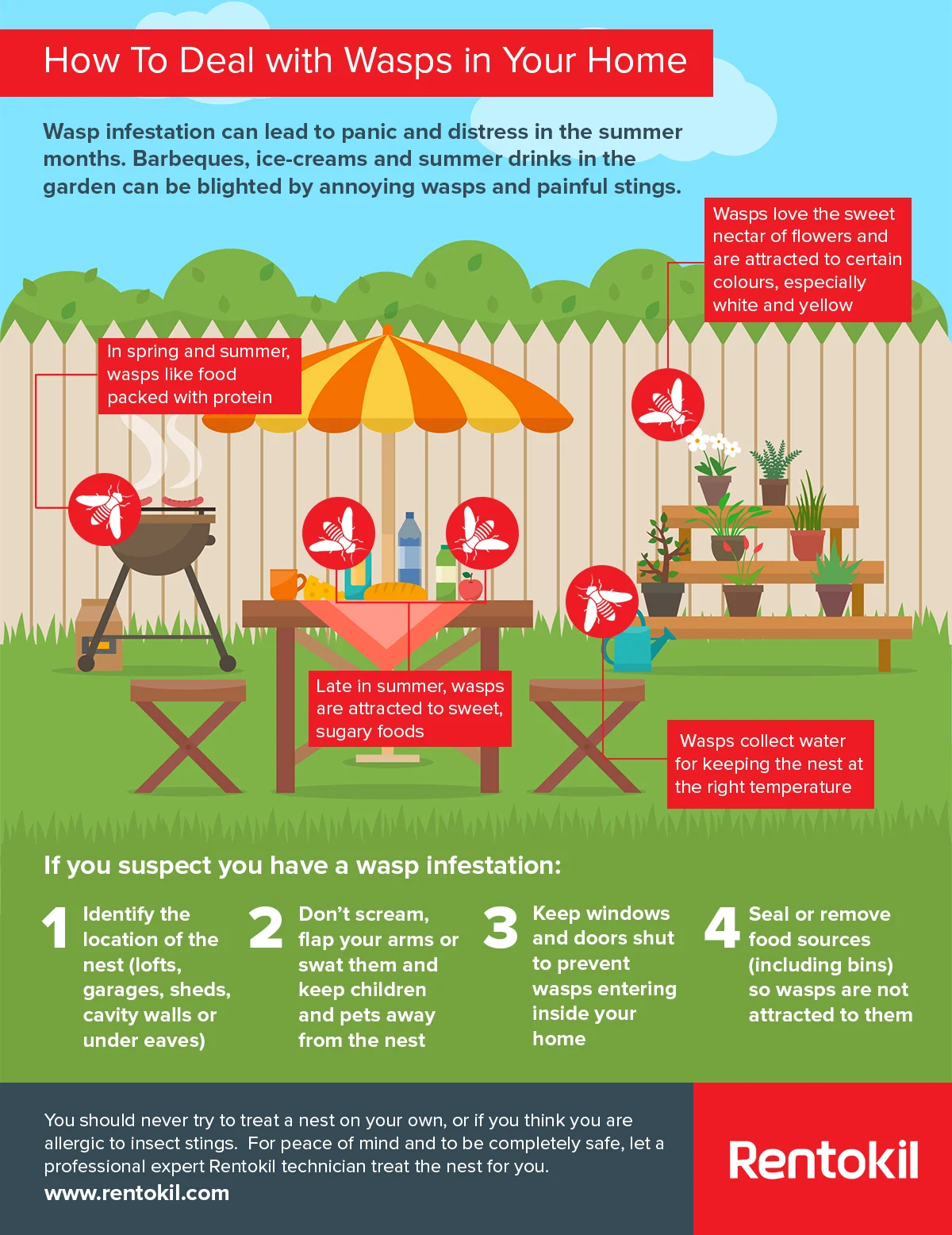
Check your home and garden for nests, usually walnut or golf ball in size at the beginning - early small nests have fewer wasps and are easier to treat quickly. Look for nests in garages, sheds, cavity walls or under eaves.
Ensure outside bins have tightly fitting lids. Keep bins at a distance from doors and windows so wasps are not attracted to the contents.
To prevent wasps entering inside your home.
If you have spotted a nest, make sure you keep children and pets away from the area.
Doors and windows disciplines: hygiene and housekeeping.
Keep windows and doors shut – to prevent wasps from entering your location/ home.
Preventative measures such as chemical sprays, candles etc, just don’t really work on a large scale and can cause irritation to guests. People, guest, and children may wear colorful clothes and perfumes. These can be powerful attractants to wasps passing by and they may consider those persons to be an interesting target.
Rentokil will help to highlight hygiene recommendations and remind regular information.
Wasps make their nests from chewed wood pulp and saliva, giving them distinctive papery walls. Nests are usually built in sheltered spots with easy access to the outside. You can often find wasp nests in wall cavities, roof spaces, under eaves, in bird boxes, sheds or garages.
To locate a nest, carefully watch the flight path of the returning wasps, this becomes easier later in the summer as the numbers of wasps increase.
Bees can enter any structure or object that contains a hole that is a quarter of an inch or larger.
Deter them from informing the swarm of the potential nesting spot. As a result, the swarm moves on to another location. However, the trick is to take action quickly as bees can move in suddenly.
can also prevent bees from nesting in your yard. Unused appliances or lawn equipment found in gardens can attract honey bees since they provide sufficient shelter for a hive to thrive.
pheromone scents left on honeycomb can attract newcomers if your home was previously occupied by honey bees.
Although high numbers of bees or wasps in your home or garden almost certainly means there is a nest nearby, getting rid of a hive/nest may not always be a possible solution. If the hive/ nest is not on your property, you will have very limited control on what you can do to remove it. Nests located in confined, hard-to-reach areas (such as cavity walls) will also be more difficult to treat.
Call Rentokil on +85229546888 for your business or your home to arrange a visit or book online today as required depending on situation.
Protecting Hong Kong homes and businesses for over 50 years