myRentokil
myRentokil login© 2026 Rentokil Initial plc and subject to the conditions in the Legal statement
During the circuit breaker period, to curb the spread of COVID-19 virus, various stringent measures are in place. Besides social distancing, some businesses including essential services have to remain closed. This includes commercial offices, retail shops, industrial and warehouse and some food establishments. Leaving a premise vacated and unattended for a certain period of time invites pest infestation risks. Read here to find out more why vacated premises are at higher pest risks.
What are some implications resulting from the closure of the circuit breaker? Firstly, there will be pest entries through cracks and crevices as they seek food and shelter. Secondly, existing nests will develop an infest that will result in a serious problem. Thirdly, the spread of pests can extend to surrounding areas thus affecting other sites. Above all, this means affecting the health and safety of the people, and as well as structural integrity and conditions.
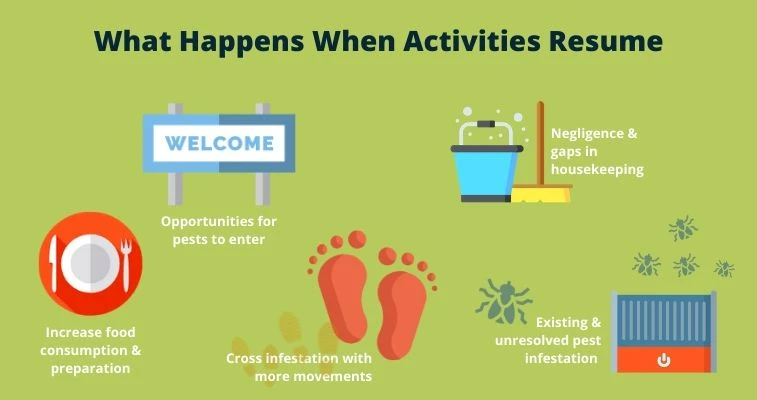
As we ease into these measures, business operations and daily lifestyle activities resume and gears up. What happens to pest related problems during circuit breaker will generally flow through as we restart our activities. Some of the reasons include:

As we resume operations and activities, it is essential to check if there is any presence of eggs, breeding source or nests around. As employees settle in and users move in and out of the premise, we may subject their health and safety to risks. For instance, there may be cockroaches and ants hiding around, flies breeding at grease traps and manholes. In addition, mosquito breeding could result from unattended premises or weather conditions that collect stagnant water.
Pests are around anywhere and emerge at any time of the day. For most premises, presence of pests is inevitable. However, due to lack of attention and absence of pest management, it is critical to access if the current pest infestation is under control or new infestation has surfaced. Above all, there is a need to check if there are additional pests lurking around the environment as we restart our activities.
Firstly, the dengue cases in Singapore and the number of active dengue clusters is an increasingly high volume. Dengue fever poses some health threats and is fatal without proper medical attention. Hence, mosquitoes are potential pest risks we need to remain vigilant and well aware of. Secondly, rats are smart and flexible pests that squeeze in gaps, able to hide well and remain undetected from our eyes. Rat infestation not only causes hazardous harm such as short circuit and fire, but diseases such as Leptospirosis. Thirdly, cockroaches and ants are seen in almost every place, especially with food sources and water.
As we settle in and step up driving engagement and activities, we may or may not observe any obvious pest activities currently. Do ask the experts such as the pest control specialists if there is a need to increase the service frequency or adopt a maintenance approach. Site survey and assessment of the environment have to be conducted to determine if your premise needs to step up on pest control services. There are several factors to evaluate the relevant and adequate pest control coverage suitable for your premise.
It is helpful to review and evaluate how your existing pest control programme is working for you. Firstly, are there recurring or unresolved pest problems that you are observing? Secondly, do you require specialised solutions to address a specific pest concern? Thirdly, is there change in operations or processes due to COVID-19 such as continuous social distancing and safety measures? In this situation, there is contactless pest control innovation such as the In2care mosquito trap to eliminate both adult flying mosquitoes and larvae. Lastly, there are units that are designed to optimise cost savings by utilising LED technology built into insect light traps that saves energy. The Rentokil Lumnia fly control is the first in the world to lure and trap flies effectively in a green manner.
While we have eased some measures and operations are resuming back to normal, vigilance and protection has to continue. Particularly at this sensitive stage, we should not compromise our employees’ and end users’ health and safety. Some examples include:
Busy work schedules and operation volume increases as we drive business growth. Constant education and reminders on pest prevention and useful tips should be provided. For example, cultivate diligent and consistent housekeeping habits. Always remember to keep doors closed at all times, particularly at kitchens or production areas. Remind your employees not to leave non-disposed packed lunches on the table. Intead, they should dispose them in the garbage bins in the pantry with lids on. Wipe away water spills and moisture immediately. Above all, stay observant to potential signs of pest infestation.
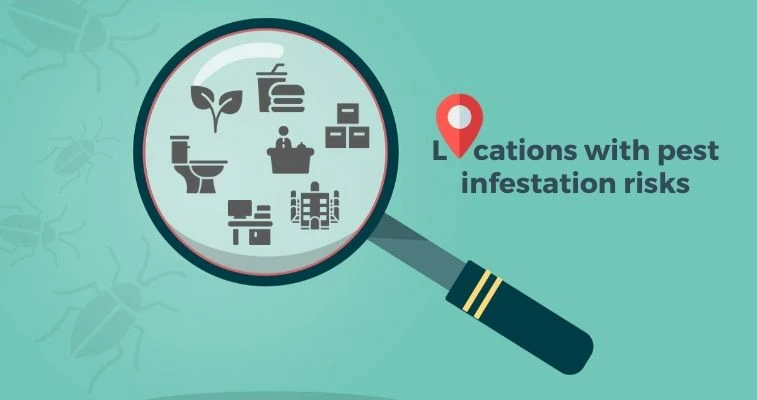
Cockroach infestation can take place not just in kitchens and eating areas but also in washrooms. This is because they need water and moisture and are able to slip in through grease traps, pipes and drainage systems. In addition, uncleaned sanitary and waste bins will invite flies with foul odour as they decompose.
Pantries are common hot spots for pests due to its abundance of food availability including actual food, leftovers, waste, water and crumbs. In addition, bins that are not covered and have presence of decaying food scraps. Lastly, not forgetting if there are soiled plates and unwashed cups left in the sink. Read more on what will attract cockroaches for cockroach prevention measures.
A place with less pest attractants however there are possible pest entries such as ants, cockroaches and rats. One common complaint is the incidence of hearing rats scratching or running above the ceiling board. Ant infestation may occur if there is regular food and drink consumption and are undisposed regularly.
Most reception areas are located at the front entrance or next to the outdoor façade and is the first line of pest invasion. Especially if the door is left open consistently or if there are heavy in and out traffic. Ants, mosquitoes and rats may turn up unwelcome at your reception.
One of the more common or regular pests appearing in IT and Server rooms is that of rats. Due to its need to gnaw regularly, they tend to chew wires and steel or aluminium frames. This often causes short circuits, power trips and in severe cases, fire. The challenge is not many users will enter the server room and rats have excellent hiding skills. Above all, rats are nocturnal and hence will emerge at night when most employees have returned home.
Considered as pests’ favourite haunt, canteen and kitchens have everything that pests needs. There is a presence of decay and food waste, sweet and sugar items, juices and soft drinks, fat and grease, protein and water. It is a location where more efforts are focused in pest control. There are cases of cockroaches found within food served in some food establishments. Stringent cockroach control has to be in place to avoid possibilities of food contamination and media crisis.
Besides home, we tend to spend most of our time at workstations. Here are some common poor work habits that make getting rid of ants for example harder.
Besides inviting pests, read more to find out why you should not leave food exposed in the office.
It is often an undisturbed paradise for pests to seek shelter, rest and breed. In addition, there are packages, clutters and piles of items that made pest detection a lot harder. Rats may also bite and damage packaging and parcels, and electrical wiring and conduits, causing hazardous outcomes.
For offices, industrial manufacturing and even residential homes, there is an attaching outdoor pouch or garden facility. There are outdoor pests that tend to lurk around such as mosquitoes, rats, ants and even birds and bees. This outdoor pest problem can turn into an indoor problem with poor proofing and first line of pest control defence.
Mosquitoes for example are attracted to the carbon dioxide among the plants, trees and shrubs, and one easy sign of mosquitoes is to ask users around if they are experiencing mosquito bites. Apply mosquito prevention by removing receptacles, engaging regular mosquito control and take up the mozzie wipeout challenge.
Depending on the nature of the production products, the assembly line and packaging area is a common key risk area for pests. In particular, food processing with raw ingredients and materials tend to attract pests ranging from flies, rats, ants, cockroaches and stored product insects. They are largely associated with grains, spices, biscuits and cereals. Due to its massive and complex set up, pests can enter without notice at any possible gaps.
Start by developing a checklist with some essential do’s and don’ts to raise awareness and reminders to the users. Some businesses circulate posters, e-newsletters and educational videos on pest education. Here is an example you can design for your users.
Do’s
Remember to throw away rubbish at the end of the day
Keep waste bin’s coverlid closed at all times
Seek proactive and early pest treatment at early stages
Wash your hands after visiting a toilet or sneezing
Clear any unwanted cartons and piles in the storage room
Dont’s
Procrastinate housekeeping and clearing piles and clutters
Leave water spills and drips around uncleaned and without drying them
Breed mosquitoes by allowing presence of stagnant water around
Leave used tissues on the working desks instead of disposing
Keep reception, meeting room or kitchen door open for pests to enter
It is crucial to collaborate with your pest control company to ensure optimal results. Pest management is not just about delivering treatments as scheduled. It requires a two-way communication and teamwork to keep infestation at bay. The partnering elements include:
Do check if you have also adopted and apply some of the essential post recovery checklists. This is to help premises and business to resume back operations safely and adequately. For example, clean and flush out the entire space from bacteria, viruses and pests. In addition, do not neglect the washrooms. Particularly after everyone has returned to work with higher traffic flow. Lastly,take care of the air quality, particularly dealing with pathogens. It is important not to compromise your users’ health and safety. Above all, surface disinfection and sanitisation is an essential service to engage, even as we start to stabilise and resume our activities. In fact, there are many misperceptions around disinfections and some might seek DIY or cheaper alternatives. Find out the common misperceptions on cleaning, disinfection and sanitisation matters here.
Termite infestation is undesirable among many house owners and indeed harmful. Firstly, signs of termite infestation are not visible and obvious. Secondly, it can cause ugly and unappealing outlook to your cosy home such as presence of mud tubes or frass (or known as termite droppings). Thirdly, it can cause real danger when structures weaken and damage. These panels and ceiling can potentially give away and drop over you. Fourthly, termites can cause some allergies and asthma conditions. Above all, not forgetting the costly repair in renovations and replacements to the termite damages. Rentokil Initial shares some cost estimates in home refurbishments.
In fact, termites are around at any time of the year, especially in humid, warm and moist condition in Singapore. As they feed on wood and cellulose materials, they can invade in almost every type of home. This includes HDB flats, apartments, landed homes, cluster bungalows and even industrial properties, warehouses and commercial offices. There are many misconceptions about termites, such as infestation risk is low so long as there is minimal wooden furniture placed. Rentokil Pest Control clarifies top ten misconceptions around termite infestation.
Firstly, be aware of what attracts termites, how to identify termites and learn the signs of termite infestations. Termites, otherwise known as white ants, are often mistaken for ants, such as the carpenter ants. This is due to its association and presence around wood structures and furniture. Secondly, in terms of termite prevention, you take the first step to check your home for termite activities. Professional termite specialists can detect the presence of termites’ cutting-edge innovation using microwave technology.
There are various options in termite control ranging from spot treatment, long-term termiticide injection and placement of termite baiting units to detect and control termite colonies. Part of the termite treatment includes home termite inspection annually, to check if there is any spread of termite colony elsewhere. As we move towards the interest in environmentally friendly and safe solutions, there is a toxic-free and safety termite treatment with seven years warranty. In addition, it has superior efficacy and residual effect and prevents further damage caused by the home. Above all, it can control a colony within 90 days.
When dealing with pest infestation with impact on financial, operation and health matters, it is crucial to speak to an expert. While vast information on pests’ facts and risks is found on the internet, there is additional and critical information that is best left with pest control specialists to answer. Credible pest control companies in Singapore will be backed with years of brand experience. It is also important to be supported with intensive R&D and develop innovations to protect people and enhance lives. These experts largely earn the trust and credibility through satisfied customers.
Call Rentokil Singapore at (65) 6347 8138 for a pest control solution today.