myRentokil
Manage your business
Have you ever noticed a cockroach lying on its back, legs in the air, seemingly frozen in time?
This sight is all too common in households, especially after using insecticides. But does a cockroach die just because it’s upside down?
Cockroaches are famously resilient creatures. They can survive for weeks without food, endure high levels of radiation and even live for days without a head. Yet, for all their toughness, they often meet their end in a rather undignified position - flat on their back!
Let’s explore why this happens, what it says about cockroach biology and what you should do if you keep seeing cockroaches in your home.

Generally, a cockroach dies on its back for several reasons, such as slipping on smooth surfaces, receiving a physical blow or reacting to insecticides. Their long legs and convex backs make it hard to stay stable on flat, slippery floors like tiles or hardwood.
When a cockroach ends up upside down, its anatomy works against it. Unlike some insects that can grip or roll, cockroaches lack the muscle strength and structure to flip themselves back over, especially if their health is compromised.
The most common cause of cockroaches dying upside down is exposure to insecticides. These chemicals disrupt the insect's nervous system, causing spasms, paralysis, and loss of motor control. As they convulse or lose coordination, cockroaches may flip onto their backs and become unable to recover.
While they may remain alive for a short while, their nervous system eventually shuts down, and they die in that position.
Cockroaches are tough insects, but they aren’t invincible. When upside down, they instinctively try to right themselves, a process that requires energy. If they’ve already been weakened by chemicals, lack of food or old age, they quickly exhaust their remaining strength. Once depleted, they stop moving and die on their backs.
Surprisingly, a cockroach’s environment plays a key role. On rough surfaces like carpet, cockroaches might be able to gain traction and flip back over. On smooth, hard surfaces, they can’t get the leverage they need.
So it’s no surprise that cockroaches are often found dead on their backs indoors, especially in bathrooms or kitchens, not outside in gardens or yards.
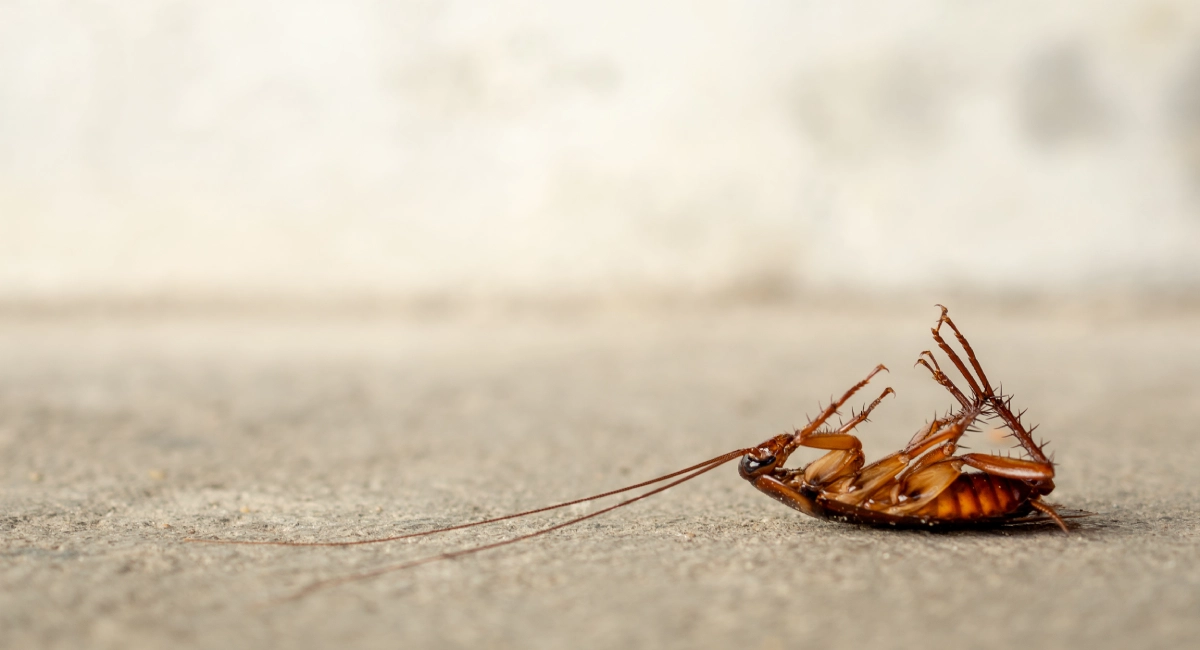
There’s no single answer to every question. A healthy cockroach with no chemical exposure might survive for hours upside down if it’s trying to recover. But a cockroach that is affected by insecticide or environmental stressors may only last a few minutes. In any case, once flipped and unable to recover, death becomes almost certain.
Cockroaches have existed for millions of years thanks to their incredible adaptation skills. They can flatten their bodies to slip into cracks, survive on crumbs and even tolerate brief decapitation. But one of their few vulnerabilities is their inability to recover from a flipped position.
So, while they may seem indestructible, the sight of a cockroach flipped over is one of the rare moments their biology fails them.
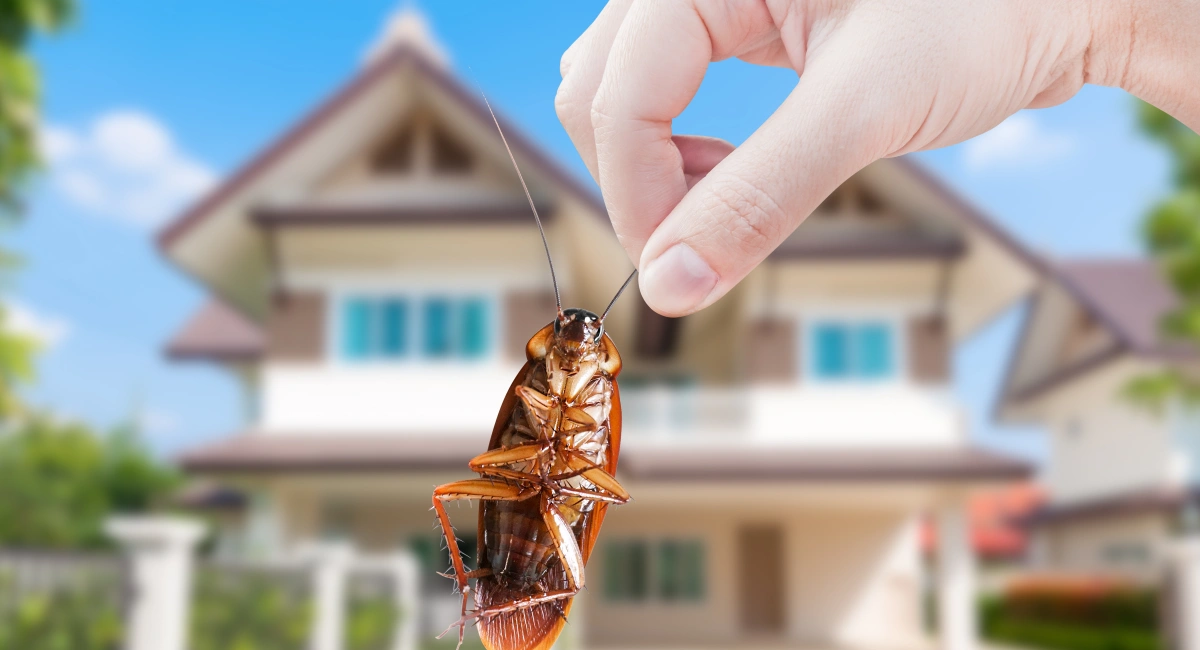
Finding the occasional dead cockroach may seem harmless. But if you’re frequently seeing live or dead cockroaches, it could mean a cockroach infestation is developing in your home.
Cockroaches often hide in several places in your house, such as:
They’re drawn to moisture, food scraps, dark and cluttered spaces. Even if you only see one or two, there could be dozens hiding nearby.
If you’re tempted to let cockroaches die on their own, think again. Dead insects attract other pests like ants or scavengers. Their decomposing bodies can also harbor and spread bacteria, especially in kitchens or food areas.
And if you're spotting cockroach problems during daylight hours? That's a red flag. These nocturnal pests typically only emerge when overcrowding or food scarcity forces them out - a sure sign that you're dealing with an infestation.
You now know why cockroaches die on their backs, but what matters is keeping your home pest-free. DIY sprays and traps may kill a few, but they rarely eliminate the cockroach nest or address the root cause.
For over 50 years, Rentokil Indonesia has delivered professional pest control solutions, including effective cockroach treatment for homes and businesses. Our experts use targeted, eco-friendly methods to eliminate cockroach infestations and prevent them from coming back.
If you keep finding dead cockroaches upside down or suspect your home has become a cockroach haven, don’t wait. Call us at 15080 or fill in the online form here.
Protecting Indonesian homes and businesses for over 50 years