myRentokil
Manage your business
Green bottle flies are not just a visual nuisance in your kitchen or business premises - they also pose serious health risks. Known for their shiny, metallic bodies and habit of landing on dirty surfaces, green bottle flies can transmit various diseases to food and humans.
This article will cover the characteristics of green bottle flies, their life cycle, the dangers they pose to health and effective ways to get rid of them from your home or business.
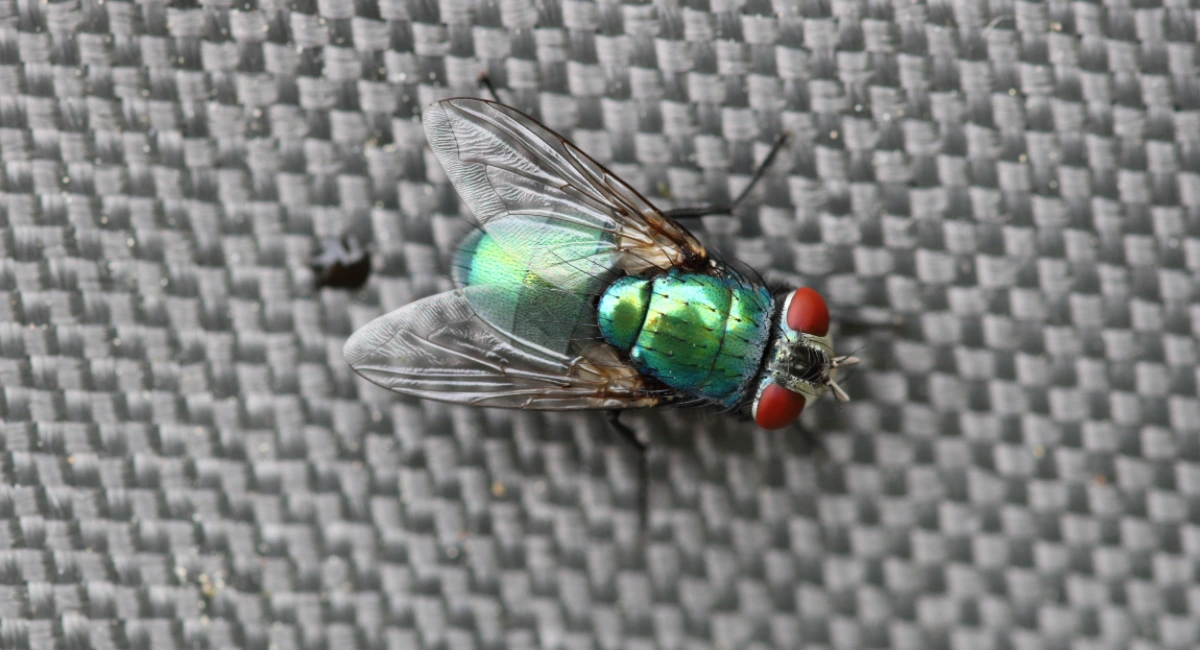
Green bottle flies (Lucilia sericata), also known as blowflies, are among the most dangerous types of flies and are commonly found in dirty environments, such as garbage bins, animal carcasses or organic waste. Their most distinctive feature is their shiny metallic green body and slightly larger size compared to common house flies.
Green bottle flies have several distinct physical characteristics that make them easily identifiable and distinguishable from other types of flies. Below are the main characteristics based on:
| Physical & behavioral characteristics | Description |
|---|---|
| Body appearance | As the name suggests, green bottle flies have a shiny metallic green body that can appear bluish under certain lighting. Their body is covered in fine hairs, especially around the thorax and abdomen. |
| Size | Adult green bottle flies typically measure between 10 - 14 mm in length. |
| Wings | Transparent wings with fine vein patterns, typically folded flat over the body when at rest. |
| Flight ability | These flies are strong and fast fliers with a noticeable buzzing sound, especially near food or waste. |
| Habitat & behavior | Often found around rotting food, animal remains and garbage - making them strong indicators of unsanitary conditions. |
It’s no coincidence that green bottle flies are often classified as large flies. Their sizable bodies make them stand out compared to other fly species like fruit flies and flesh flies.
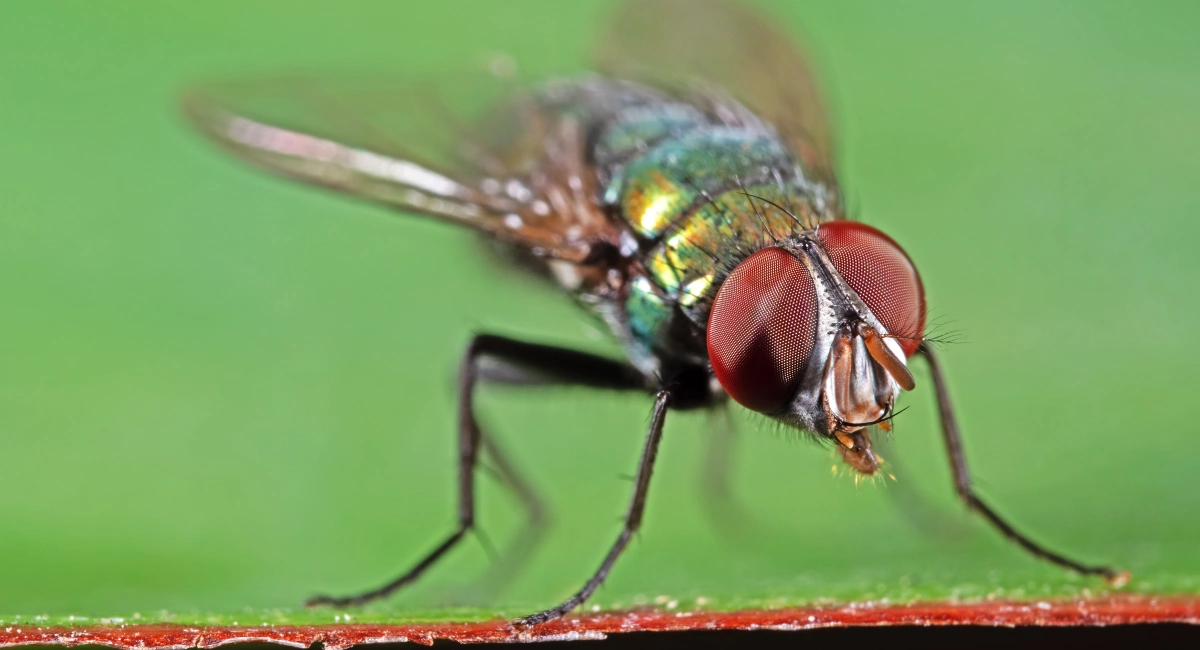
Thus, if adult green bottle flies typically measure between 10 - 14 mm, which makes them:
Green bottle flies prefer unsanitary and moist areas where decaying matter is present. They are commonly found in:
These flies often enter homes and kitchens through open windows or ventilation gaps, especially when food is left uncovered.
Once they reach adulthood, green bottle flies typically live for 15 to 30 days, depending on temperature and food availability. However, during this short life, they can reproduce rapidly - making them a serious infestation risk if not controlled quickly.
Learn more about the fly life cycle here
Green bottle flies breed rapidly. Their life cycle from egg to adult is incredibly short:
This means a full fly infestation can establish itself in under two weeks - especially in warm, dirty environments with plenty of decaying organic matter.
A single female green bottle fly can lay up to 250 eggs in one cycle, and she’ll typically choose places rich in protein and strong odors, such as:
If even a small number of eggs go unnoticed, the population can quickly explode.
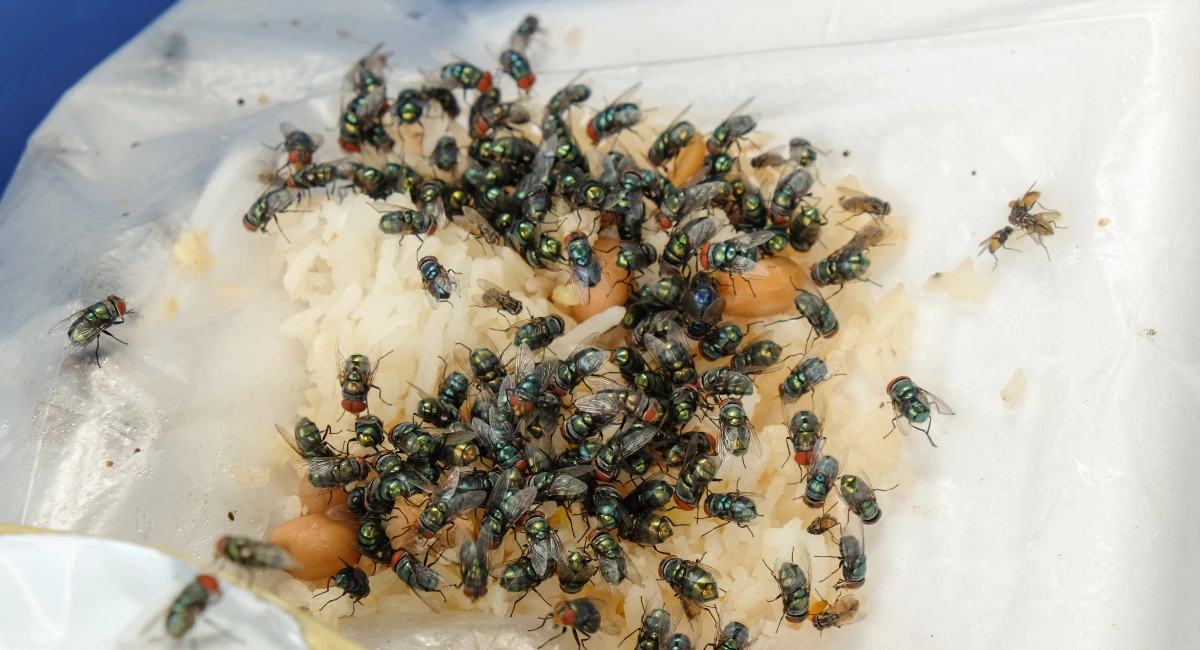
Green bottle flies are drawn to environments where they can find food and breeding sites. Common attractants include:
If these conditions exist in or around your home or business, it's only a matter of time before green bottle flies show up.
Yes, green bottle flies are more than just a nuisance - they’re a health risk. These flies regularly land on decaying organic matter, such as animal carcasses and garbage, picking up bacteria along the way. When they later land on food or kitchen surfaces, they can transfer pathogens such as Salmonella, E. coli and other foodborne bacteria.
Some health risks associated with green bottle flies:
In commercial settings, especially food service, even a single green bottle fly can trigger serious food safety violations and harm customer trust.
Dealing with fly infestations - especially from green bottle flies requires a combination of proper hygiene, environmental control and support from professional pest management. Here’s how to effectively keep flies away and prevent future outbreaks:
Since green bottle flies thrive in dirty environments, cleanliness is your first line of defense:
In both homes and businesses, look for moisture or access points where flies can breed:
For businesses:
For homes:
If the infestation becomes unmanageable, it’s best to bring in experts.
At Rentokil, we offer professional fly control solutions based on thorough inspection and treatment plans. Our Lumnia fly control units utilize UV light and hygienic catch systems to trap flies efficiently without contaminating food surfaces.
With advanced technology and decades of experience, Rentokil can help eliminate green bottle flies safely and permanently from both residential and commercial environments.
It’s a large, shiny green fly often found around garbage, decaying meat and animal carcasses.
Green bottle flies typically live between 15 to 30 days as adults. However, their lifespan depends on environmental conditions. Without access to food, adult green bottle flies may only survive for 2 to 3 days.
Garbage dumps, sewage drains, animal carcasses and unhygienic kitchens.
They’re often drawn to food waste, moisture and poor hygiene conditions they can easily find in your home.
Decaying organic matter like meat, food scraps, feces and carcasses.
In places rich in protein and decay, such as rotting meat, wounds or open trash.
Green bottle flies may look vibrant, but they pose a serious threat to health and hygiene. Whether they’re hovering around your kitchen or appearing in your place of business, early action is key. Start by improving cleanliness and maintaining a hygienic environment.
However, if the problem persists, it’s time to let professional pest control take over. Rentokil offers fast, safe and effective fly control solutions tailored to your specific needs.
Protect your home or business today. Contact Rentokil for expert fly control.
Protecting Indonesian homes and businesses for over 50 years