Trusted by over 100,000 home and business customers in Thailand.
© 2026 Rentokil Initial plc and subject to the conditions in the Legal statement.
Termite infestation is usually not apparent until severe damages have incurred. They live in dark, humid and protected environment, which make them so hard to find - until it’s too late.
As termites devour their way through wood from the inside, it can be rather challenging to detect a termite infestation but there are some tell-tale signs that indicate their presence.
Here are a few common signs of termites infestation that you might see (or hear) around your home or business premises:
Call Rentokil today for advice and to schedule a termite inspection of your home or business or contact us now.
Termites eat 24-hours-a-day, 7-days-a-week. This means they are constantly consuming wood and damaging it. If left untreated, termites can weaken the wood within your home leading to costlier damages.
Call us today at 02 290 8500, 1800 225 226 (Toll-free number) or contact us online to arrange for a FREE termite inspection for your home or business.

Trails of underground termites are often built from the soil. mud or dirt It looks like a long black line. The reason why termites have to build these pathways is because their skin is fragile. It had to find something to cover itself from the heat. Don't let it dry out while searching for food. These traces are often found around the walls. wooden corner edge or the point that is the entrance to the building
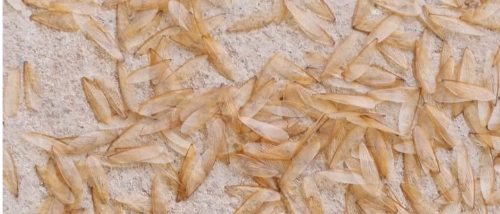
If the fragments of its wings fall on window sills and on the floor in the morning Be careful that termites lurk in your house because moths are termites in the breeding caste. Its wings are thrown off after they have mated. Later, it will disappear underground to create a termite empire below. and become the termite king The queen termite lives in a nest under your house.
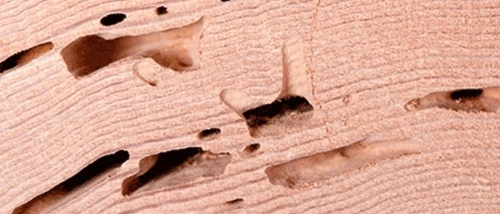
If you want to check whether there are termites inside the wall of your house or not, try knocking on the wall, cornice, door edge if you hear a hollow sound. (sounds like crumpling paper) It can be assumed that Some of the interior wood has already been eaten by termites. Because termites tend to eat wood from the inside. Leaving only a thin bark on the outside, making it difficult to notice.
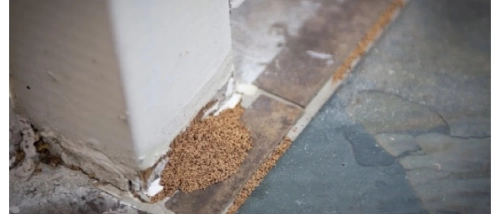
for dry wood termites (Tree-eating termites) after they have eaten the wood. Dried wood termites leave brown droppings. These droppings are often found under decayed wood,
courtesy of wikimedia.org.
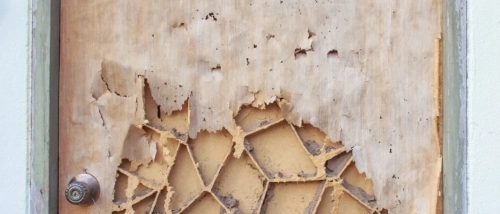
Termites create an environment from their excrement or mud to cover themselves. Retains heat and moisture As a result, wooden doors or windows are swollen. Makes it difficult to open and close
Thanks to the image from freepik.com