The Experts in Pest Control
Don't just imagine your business with no pests...experience pest-free with Rentokil.
Insect light traps (ILTs) are an integral component of a holistic fly-control solution. They can help control a number of different flying insects by removing them from circulation, but it’s worth noting they shouldn’t be the only control method in place. ILTs should always be coupled with proper sanitation – the key to reducing fly populations.
ILTs can also be used as monitoring devices to inform integrated pest management (IPM). To use ILTs as monitoring devices, you can record the types of flying insects being captured, the species captured and the date of capture.
This information is useful to know what other steps might be needed to reduce the number of a particular flying insect entering your premises.
Since there are no global standards to dictate what goes into an ILT, there’s a very wide range of units available on the market. What’s interesting is that they all look quite different, so some of these must perform better than others.
Because of the lack of standards, there’s no assurance that all the ILTs out there work. However, at Rentokil, we have the capabilities and expertise to ensure our ILTs work at maximum capacity as its part of the overall service that we offer.
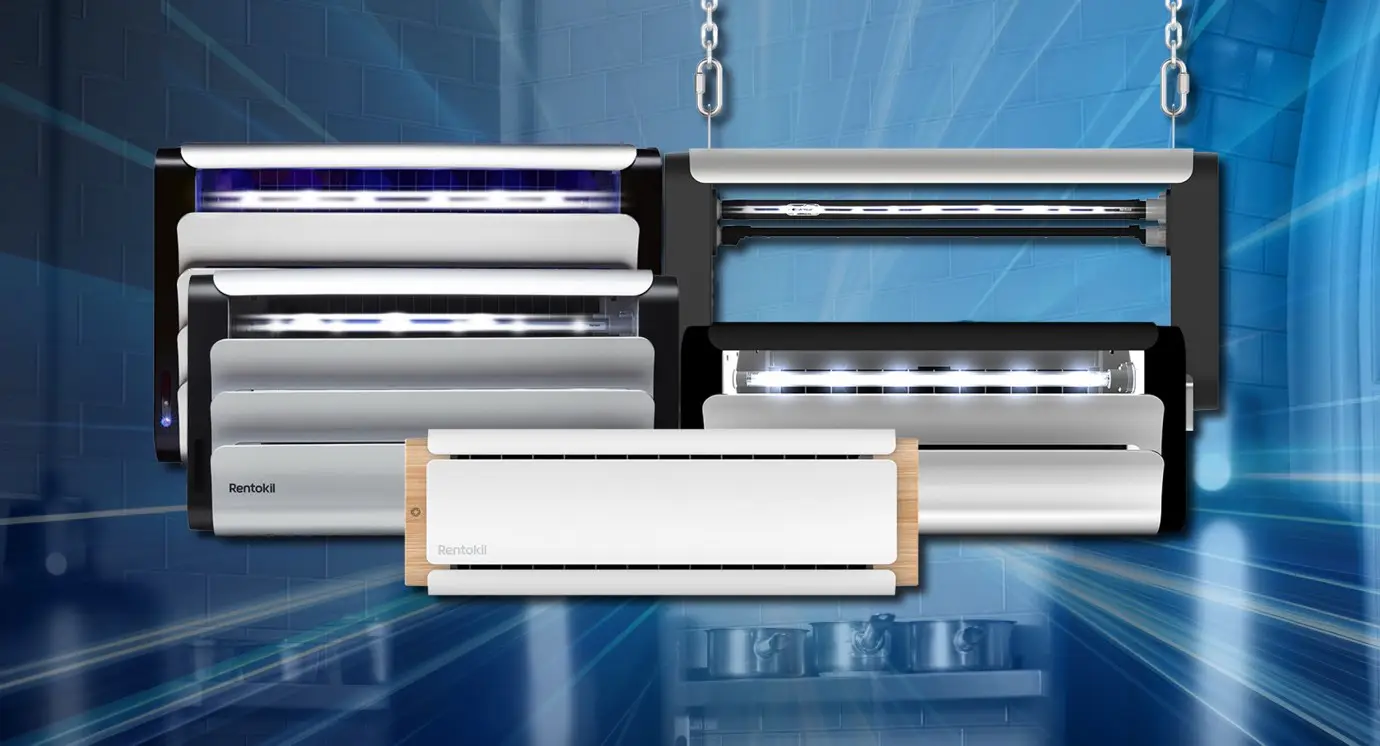
We’ve developed an ILT range with 5 Lumnia products that all look very similar. This is because we know what makes a good ILT and the best way to catch insects, and we’ve applied this thinking to all the products.
The design of the Lumnia units is the consequence of thorough research undertaken by our expert entomologists at our Global Centre for Science and Innovation.
Let’s take a closer look at our Lumnia units and the science and thinking behind their design.
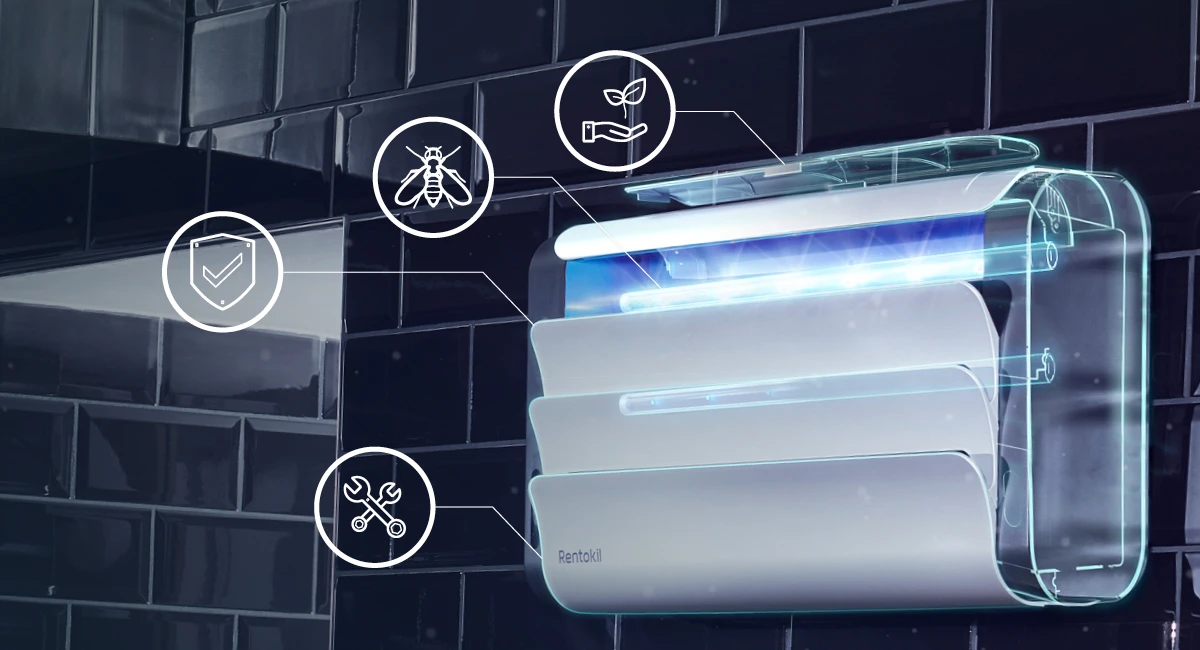
Here are some of the factors we considered when designing our ILTs.
1. The lamps
We know that flies’ UV photoreceptors are tuned to wavelengths around 350 nanometres, so our Lumnia lamps have a UV output of 365nm – close to the optimum wavelength of fly UV receptors.
There’s little UV light in indoor environments. Therefore the LED lamps, which are bright and intense, will appear to the flies as bright sources of light and attract them to the unit from further away.
Our Lumnia units also use LED lamps as opposed to fluorescent tubes, so there’s reduced power consumption and testing shows these LED tubes have an 80% further throw of combined UVA/UVB than traditional fluorescent tubes. The lamps also effectively convert most of the energy (about 95%) into light with little heat loss.
The UV LEDs in our units last four years compared to one year for equivalent fluorescent UV tubes. Meaning lamp waste is also reduced by 75%. Ultimately, LEDs are more sustainable, longer-lasting and energy efficient than fluorescent tubes.
2.Colour of the cover
We gave the colour of our Lumnia units a lot of thought and research, too. The units are dark coloured because studies show that insect catch-rates are higher when the ILT’s colour contrasts with the wall behind it. This is because the high contrast makes the unit stand out more to flies, helping you achieve a better catch-rate.
The colour of the unit itself is less important than the contrast created and our expert technicians are specially trained to find the best position (with the highest contrast) for your Lumnia on your premises.
They know exactly what affects the efficacy of the ILT and the factors to consider when positioning them.
3.Horizontal versus vertical design
Our Lumnia units use horizontal lights because we know it’s believed that horizontal lights are better at attracting and catching more flies. This is closest to how natural UV is in the environment.
Natural UV is horizontally polarised, or like a horizon, for navigation and so we’ve recreated this with the lights in our units. The horizontal orientation means wide, discrete bands of light are emitted, which are attractive to flies and boost your catch-rate.
4.Shape of the units
The shape of our ILTs are slim, so they’re less obtrusive and have a better design aesthetic with optimum efficacy.
They’re also flat to fit easily on a wall and Lumnia has been designed for easy opening and being able to slide down the parts that need servicing for easier access.
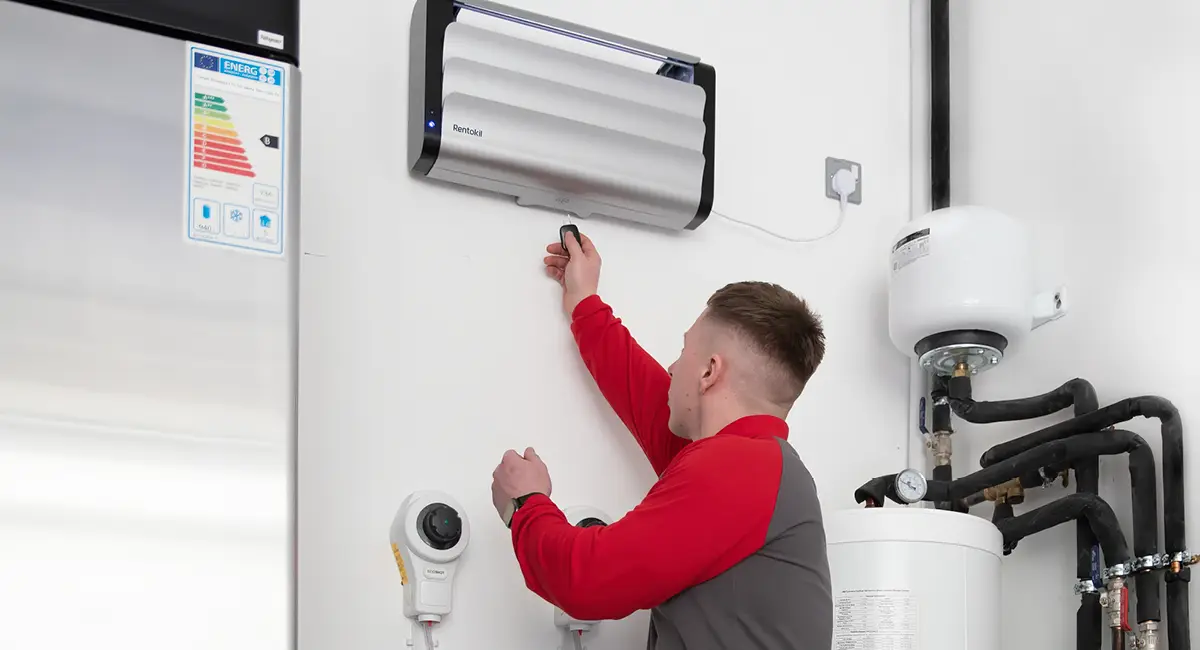
We provide a comprehensive fly-control solution by offering Lumnia, the biggest and most sustainable range of ILTs on the market, coupled with a full service from our expert technicians to bring you ultimate fly control and peace of mind.
This means that your fly control doesn’t end with the product. Rather, it’s accompanied with full servicing and recommendations from expert technicians.
For audit purposes, our ERDM system also supports compliance. ERDM is Rentokil’s tailored approach to integrated pest management (IPM), which stands for: Exclusion, Restriction, Destruction and Monitoring.
It provides trend reporting, recommendations from technicians, interactive site maps and analytical tools to support audit compliance.
Lumnia is a trusted fly-control solution because it’s backed by over 95 years of experience in pest control. That’s nearly a century of research, development, expertise and knowledge amalgamated to create the ultimate ILT.
Our units have had scientific input from our leading entomologists in our research centre, who meticulously designed the units and continue to conduct thorough research and innovation to ensure we’re always offering you the best solution on the market.
It’s important to note that an ILT should be part of a holistic IPM programme for full effectiveness.
IPM is an ecosystem of different practices that come together to eliminate the root cause of pest infestations and focus on their long-term prevention.
An IPM strategy would usually consist of the following.
Here are some of the most salient benefits of IPM for businesses.