The Experts in Pest Control
Don't just imagine your business with no pests...experience pest-free with Rentokil.
In the bustling city full of people, traffic, and towering skyscrapers, we are likely familiar with the sight of gray pigeons soaring through the air or waddling around the streets, sidewalks, or parks. Pigeons have been long-time companions of humans, adapting well to changing environments. However, they are often seen as a nuisance, contributing to pollution and acting as vectors for diseases. Many overlook their significance, viewing them merely as "dirty birds" without ever truly understanding their fascinating behaviors.
This article will introduce you to pigeons, exploring their characteristics and intriguing behaviors, such as foraging, flocking, communication, adaptation, and the impact they have on humans and the environment. This understanding will help us coexist with pigeons in a more balanced way.
Pigeons are common sights in large cities and may seem like ordinary, unremarkable birds. However, did you know that beneath their gray feathers and seemingly slow movements, they possess a remarkable range of behaviors that allow them to survive and adapt to urban environments in extraordinary ways? Let's explore some interesting behaviors of city pigeons that might change the way you perceive them.
Although pigeons generally share similar features, there is actually a wide range of physical differences among them, which can provide insights into their behaviors. Let's take a closer look at how their external traits can reveal certain characteristics.
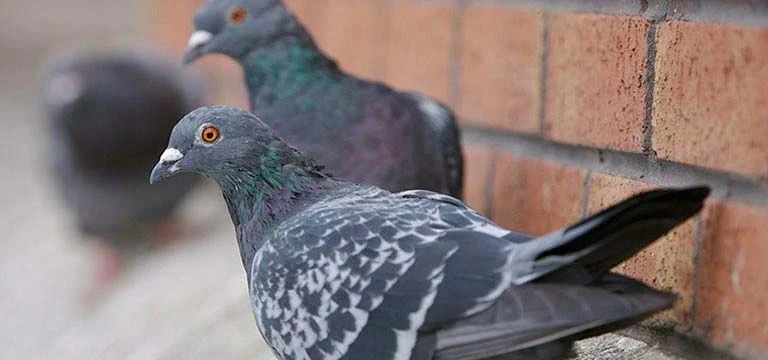
Pigeons are medium-sized birds, typically measuring 30-37 centimeters in length and weighing between 238-380 grams. Variations in size may indicate differences in sex, age, or species. For example, male pigeons tend to be larger than females. They have a round head, short neck, wide wings, and a relatively long tail, features that enable them to fly gracefully both short and long distances.
A common misconception is that all pigeons are grayish-blue, but in reality, pigeons come in a variety of colors, such as white, brown, black, red, and even patterned varieties. These color variations can result from factors like species, crossbreeding, or environmental conditions. Many pigeons also have two distinct black bands on each wing, a characteristic that helps identify their species.
Pigeons also have red legs and feet, with sharp claws that help them perch on rough surfaces or tree branches. Their short, strong beaks are well-suited for pecking at food such as seeds, fruits, and insects. Their eyes are often a striking red or orange, and while their color vision is not as advanced as that of humans, they can distinguish different colors quite well.
Foraging for food is a fundamental behavior essential for the survival of all living creatures, including pigeons. While we are familiar with the sight of pigeons pecking at food on the ground, the reality of their food-seeking behavior is much more complex, with several fascinating aspects worth exploring.
Pigeons are granivorous birds, with their primary food source being various types of grains such as rice, corn, millet, and beans. In addition to seeds, pigeons also consume a wide range of other foods, including:
Pigeons use their sharp vision to spot food from a distance. They can identify small seeds or insects that are moving around and use their strong beaks to peck at food. Pigeons are capable of cracking hard seeds and even peeling the skin off fruits. They often forage and eat together in groups, which increases their chances of finding food and offers safety from predators.
In urban areas, pigeons have adapted to eating a more varied diet due to the limited natural food sources. They often feed on food scraps discarded by humans, birdseed, or even garbage. They are skilled at finding food in various locations, including parks, markets, along streets, and in trash bins. Pigeons can also learn to remember specific food sources and times when humans are likely to feed them.
An interesting food-related behavior is that pigeons can store food in their crop (a pouch in the throat) to later feed their chicks or eat it themselves. They can also drink water directly without needing to tilt their heads back, unlike other birds that must raise their heads to swallow water. Moreover, pigeons tend to select foods they prefer or those that are more nutritious.
Choosing a suitable habitat is another critical behavior for pigeons, directly related to survival, food sourcing, and raising their young. In the wild, pigeons typically reside on cliffs, but when they moved into cities, they had to adapt and find new habitats that suit urban environments.
In the city, pigeons often nest in hidden spaces in tall buildings, such as under eaves, window ledges, and ventilation gaps, as these locations offer protection from predators and maintain a comfortable temperature. Under bridges is another popular habitat, providing both shelter and accumulated bird droppings that attract insects, a supplemental food source for pigeons.
Pigeons also commonly roost in trees or open areas in public parks, where there is a ready supply of food and space for rest and mating. Additionally, temples are sacred places where people often feed pigeons, making them a significant source of food and shelter for these birds in the city. Pigeons may also build nests on rooftops, eaves, or gutters, which can sometimes cause inconvenience to homeowners.
Importantly, pigeons choose habitats that are safe from predators, such as cats, dogs, and birds of prey. They prefer warm environments with appropriate temperatures, especially in winter, and tend to settle near food sources such as markets, restaurants, or garbage disposal sites.

Flocking is a common behavior observed in many bird species, including pigeons. This behavior is not random, but rather has mechanisms and benefits that help ensure their survival. Let’s explore how pigeons fly in groups and the advantages of this behavior.
Pigeon flocks can range from a few birds to several hundred, depending on the availability of food, season, and other factors. These flocks fly in an orderly manner, maintaining a reasonable distance from each other and flying in the same direction. Sometimes, they may circle or move up and down rhythmically. When one pigeon in the flock changes direction, the others quickly follow suit, allowing the entire group to move together seamlessly. In a flock, each pigeon has its position: stronger or more experienced pigeons typically lead, while weaker ones fly at the back.
Scientists believe that the formation of pigeon flocks is driven by their keen eyesight and the instinct to imitate the flight direction of others in the group. Pigeons also use vocalizations to communicate and coordinate with fellow flock members. This instinctual behavior to stay in groups has been passed down from their ancestors and plays a vital role in their survival in the wild and urban environments alike.
การบินเป็นฝูงเป็นพฤติกรรมที่พบได้บ่อยในนกหลายชนิด รวมถึงนกพิราบด้วย ซึ่งไม่ได้เกิดขึ้นแบบสุ่ม แต่มีกลไกและ มีประโยชน์ต่อการอยู่รอดของพวกมัน ลองมาดูกันครับว่า การบินเป็นฝูงของนกพิราบมีลักษณะอย่างไร และมีข้อดีอย่างไรบ้าง
โดยฝูงนกพิราบอาจมีจำนวนตั้งแต่ ไม่กี่ตัว ไปจนถึง หลายร้อยตัว ขึ้นอยู่กับ แหล่งอาหาร ฤดูกาล และปัจจัยอื่น ๆ และจะบินอย่างเป็นระเบียบ โดยรักษาระยะห่างกันพอสมควร และบินในทิศทางเดียวกัน บางครั้งอาจบินวนเป็นวงกลม หรือบินขึ้นลงเป็นจังหวะ เมื่อนกพิราบตัวใดตัวหนึ่งในฝูงเปลี่ยนทิศทาง นกตัวอื่น ๆ จะเปลี่ยนทิศทางตามอย่างรวดเร็ว ทำให้ฝูงนกสามารถเคลื่อนที่ไปพร้อม ๆ กันได้ ทั้งนี้นกพิราบแต่ละตัวจะมีตำแหน่งในฝูง โดยนกตัวที่แข็งแรง หรือมีประสบการณ์มากกว่า มักจะบินนำหน้า ส่วนนกตัวที่อ่อนแอกว่า จะบินตามหลัง
ซึ่งนักวิทยาศาสตร์เชื่อว่า การบินเป็นฝูงของนกพิราบ เกิดจากนกพิราบใช้สายตาในการมอง และเลียนแบบทิศทางการบินของนกตัวอื่นๆ ในฝูง และใช้เสียง ในการสื่อสาร และประสานการบินกับนกตัวอื่น ๆ ในฝูง รวมไปถึงมีสัญชาตญาณการอยู่รวมกันเป็นฝูง ซึ่งเป็นพฤติกรรมที่สืบทอดมาตั้งแต่บรรพบุรุษ
The breeding behavior of pigeons is an interesting process that plays a crucial role in the survival of the species. Understanding their reproductive habits can help us appreciate the wonders of nature and also inform strategies for managing pigeon populations to reduce potential conflicts with humans. Let's take a closer look at this fascinating behavior.
Pigeons can breed year-round, but the peak breeding seasons are during the early and late rainy seasons (around May-June and September-October), when the weather is warm and food is abundant. Pigeons are monogamous, meaning they mate with only one partner and stay together for life. If one of the partners dies, they may not find a new mate.
Male pigeons exhibit several behaviors to attract females, such as:
Females choose their mate based on external traits like feather color, size, and behavior such as strength and attentiveness. Once paired, both the male and female pigeons collaborate to build a nest, using materials like twigs, grass, fabric scraps, and paper. They often build their nests in sheltered spaces such as building crevices, eaves, windowsills, or trees to provide safety and protect their offspring from the weather and predators.
The female pigeon lays one or two small, white eggs, which are incubated by both parents in turns for about 18 days. The chicks hatch blind and featherless, completely dependent on their parents for care. The parents feed their young "pigeon milk," a nutritious liquid produced by glands in their stomachs. The chicks remain in the nest for about 30 days before they are ready to fly and leave the nest.
In the end, pigeons, though often considered ordinary birds, display remarkable behaviors that contribute to their survival. Understanding these behaviors helps us coexist with them more harmoniously and manage potential issues more effectively. If you are facing challenges with pigeon infestations, Rentokil is the trusted expert you can rely on. With years of experience and expertise, we are ready to help manage and prevent pigeon problems, ensuring you can live comfortably without worries. Contact us today!