myRentokil
myRentokil login© 2026 Rentokil Initial plc (M) Sdn Bhd Registration No: 197201001250 (12889-M). Subject to the conditions in the Legal statement
We have a range of insect light traps to cater to different business needs and requirements. Each of our fly traps uses unique technology to hygienically and effectively capture flying insects. Unlike conventional Electric Fly Killers with high-voltage killing grids that zap flying insects and leave a litter of insect fragments and contaminated spores, the fly catcher units we use are safe and hygienic because they use UV light technology to attract insects and trap them on a hidden glue board.
The range we use is also completely silent in operation, getting rid of flying insects discreetly. All our units work against all sizes of flying insects, and are quickly and easily serviced by our Service Technicians to save your business time, money and trouble.
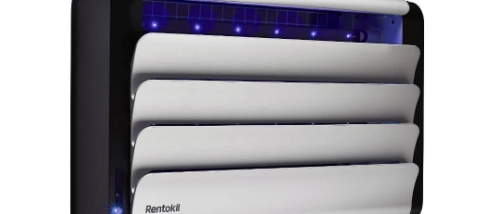
Developed with innovative patented LED technology, Lumnia units are designed to attract and trap insects hygienically, eliminating the risk of contamination. Thus giving you and your customers complete peace of mind. Check out our full range of Lumnia and find out how each of our models can support your business
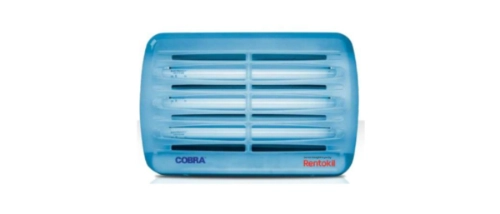
Our heavy duty insect light trap is specifically designed to offer effective fly control for food related industries and property management companies. The unit has a highly effective glue board that is designed for use in high to medium risk areas. The glue board covers the back and base of the unit, requiring replacement every 4 to 8 weeks depending on local environments.
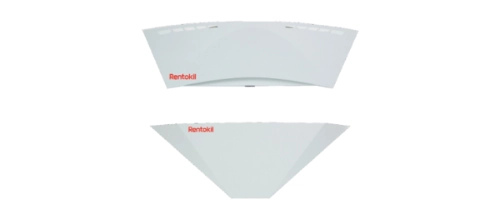
The discreet flying insect and fly control unit is designed to look like an attractive wall light or uplight. Can be installed in a public area where hygiene is an important consideration.

Luminos Sapphire is a discreet and attractive unit specifically designed for front of house fly control, where both discretion and effectiveness are essential. It has a modern design that offers a stylish and effective way of controlling flying insects in public areas.
*313 tests carried out on 87 units affecting 31300 flies over a 28 month period (2010)