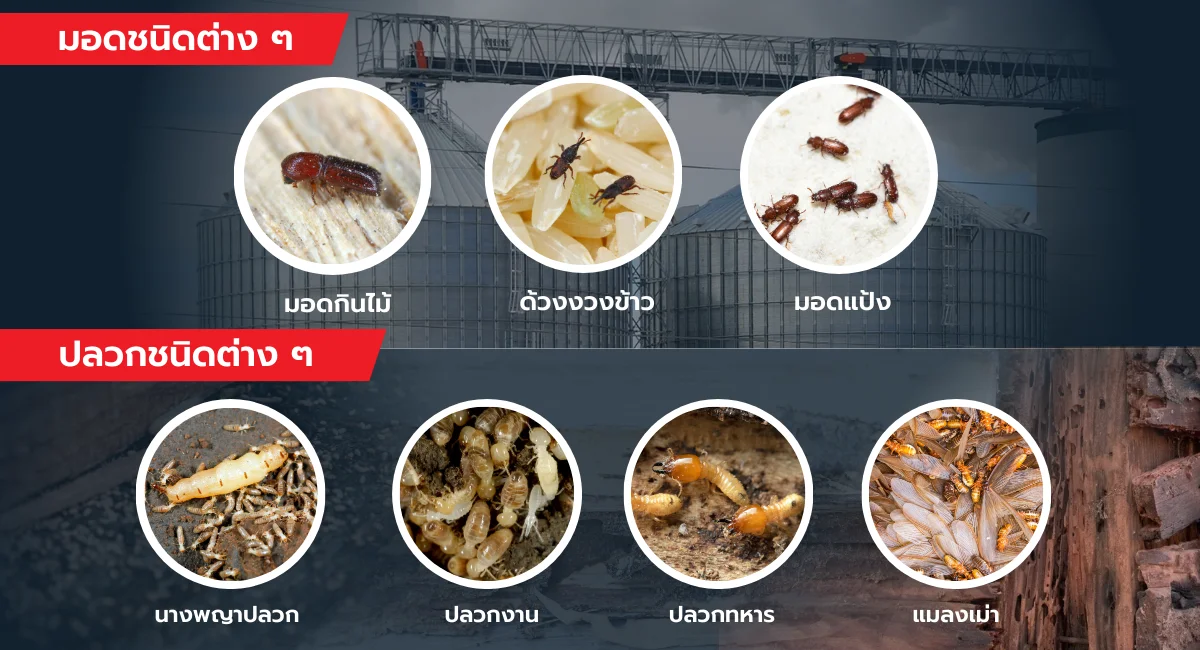
Food Sources
- Moths:
- Wood-eating types feed on starches and sugars in wood. Preferences vary by species and wood type (hardwood, softwood, dry or damp).
- Food moths eat rice, flour, grains, seeds, spices, pasta, pet food, even cookies and dried fruits.
- Termites:
- Feed on cellulose found in wood, paper, cardboard, and even natural fiber clothing.
Life Cycle
- Moths:
- Complete metamorphosis: Egg → Larva (worm) → Pupa → Adult beetle.
- The larva stage causes the most damage. Adults mostly reproduce and lay eggs.
- Termites:
- Incomplete metamorphosis: Egg → Nymph → Adult.
- Nymphs look like small adults and molt several times before taking on a role in the colony.
Must-Know Moth FAQs
Do Moths Bite?
No, moths don’t bite people or pets. Both wood moths and pantry moths do not have biting or blood-sucking behavior. However, wood moth frass (powder) may irritate sensitive skin or respiratory systems in allergic individuals.
What Do Moths Eat?
It depends on the type:
- Wood Moths:
- Eat starch, sugar, and cellulose in wood.
- Preferences vary:
- Lyctus beetles like porous hardwoods (rubberwood, oak).
- Deathwatch beetles eat both soft and hardwoods, especially if old or damp.
- Pantry Moths:
- Rice (white, brown, sticky)
- All-purpose or baking flours
- Grains (oats, barley, millet)
- Seeds, dried legumes, pasta, cereals
- Spices, dried herbs, pet food
- Biscuits, cookies, chocolates, dried fruits
Can Moths Come Back After Treatment?
Yes. Recurrence is common due to:
- Incomplete treatment: Eggs or larvae hidden deep in wood may survive and develop over years.
- Reintroduction: Bringing in new contaminated wood or food.
- Adult moths flying in and restarting the cycle.
Prevention is key:
- Use kiln-dried or insect-treated wood.
- Paint or seal wood surfaces.
- Reduce humidity.
- Store dry goods in sealed containers.
When Should You Call a Pest Control Company?
You should consider professional help when:
- Infestation is widespread across house structures or expensive furniture.
- Uncertain if it's moths or termites – misidentification can worsen the problem.
- You suspect termites – they cause faster and more severe structural damage.
- DIY treatments fail – sprays or basic cleaning don’t solve the issue.
- You want long-term prevention – experts provide monitoring and warranties.
Rentokil, a global pest control leader, offers free consultations and advanced pest solutions to protect your home.
Final Thoughts
Now you know the truth about where moths come from, how they enter your home, how to tell them apart from termites, and what to do when you spot signs of trouble.
While prevention is crucial, early detection and prompt action make all the difference. Don’t ignore fine powder under your furniture or tiny holes in wood—these could be red flags. If in doubt, always consult an expert.
Stay informed. Stay protected. Stop the damage before it spreads.
If you’re unsure whether you’re dealing with moths or termites, reach out to Rentokil for a free inspection. Don’t wait until your cherished home becomes a feast for these destructive invaders.