© 2026 Rentokil Initial plc is onderworpen aan de Nederlandse wetgeving. Alle rechten voorbehouden. Wettelijke vermelding.
What if your fly traps could talk? Spoiler alert: ours almost do. How does a machine learn to spot a fly? Join our expert Katie Hansen-Reading, IoT Vision Product Owner at Rentokil, for the answer and an exclusive look behind the scenes of AI-powered fly control. Discover how machine learning is taking insect light traps to a whole new level.
Keeping our AIs on flies
What exactly do we mean when we talk about ‘AI-powered fly control’, and how is it transforming the way we approach these pests? At its core, it’s about taking proven methods of attracting and capturing flies, such as insect light traps, and boosting their capabilities with machine learning. With AI-powered fly control, insect light traps don’t just capture flies; they capture data, learn from the data they gather, and give you a much clearer picture of fly activity on your premises.
Behind the eyes
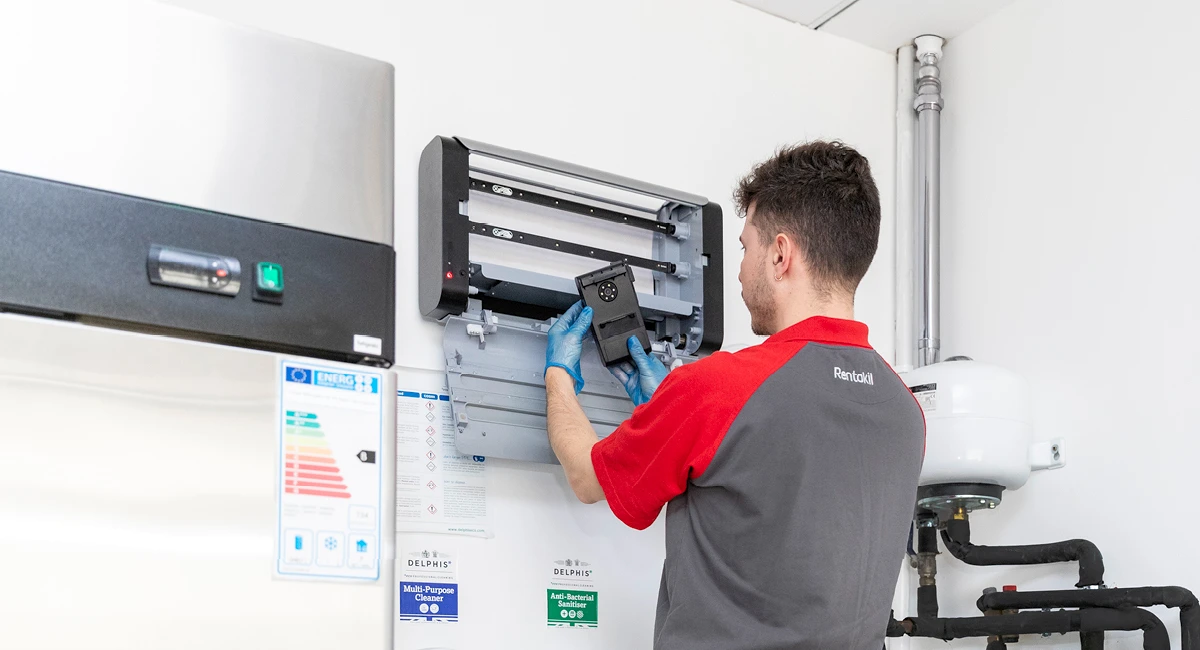
Improved fly insight begins with intelligent eyesight, so let’s venture behind the ‘eyes’ of such a system — the advanced camera technology that’s more than just a lens. This is where the journey begins.
Katie Hansen-Reading, our IoT Vision Product Owner at Rentokil, sheds light on the type of technology involved. "For effective AI-powered fly control, the camera is typically purpose-built for the unique demands of this application,” she explains. “Some can even be retrofitted, sitting discreetly atop existing insect light traps. Its core function is frequently capturing a high-quality image of the entire glueboard, giving clear insight into what’s happening in the trap”.
So, to provide the machine-learning system with the clear visual data it needs, how 'sharp' does this digital eye need to be in terms of resolution? "A 2-megapixel camera is often considered a good resolution for this application,” Katie notes. "It’s certainly high enough to provide the kind of quality image AI needs to accurately identify and assess fly activity without being overly complex."
Resolution is one part of the equation for a quality image, but strategic camera placement is equally important. “The camera’s positioning is key to its effectiveness and should be meticulously optimised for glueboard monitoring,” Katie emphasises. “It should point directly down and focus squarely on the glueboard, for a consistently clear, accurate image."
How does such a system capture these fleeting moments? It's generally not constant streaming. "It’s typically a strategic, interval-based approach," Katie explains. "A high-quality glueboard image is taken, often daily, and then processed by AI algorithms almost instantly. If an alert threshold is broken," Katie adds, "the system is designed to flag this immediately”. This allows for rapid awareness of any significant fly activity.
Behind the brain

The “eyes” of an AI-enabled fly-control system provide the visual input, but it’s the “brain” that processes this information and understands what it sees. With the visual data now captured, let’s move to the machine-learning algorithms that act as the ‘brain’ of the technology, transforming images into intelligent insights.
You may be wondering how the AI knows when to raise an alert. This is where the system moves from generic monitoring to bespoke protection. Katie explains the importance of this customisation.
"Pest control is never a one-size-fits-all solution," Katie notes. "Different sites and even different areas within the same site have vastly different risk profiles. The real intelligence of such a system is the ability to work with customers to set meaningful, bespoke alert thresholds. It’s a collaborative process, which ensures that the alerts are not just automated, but genuinely relevant to the specific risks of that environment, allowing for a truly proactive and targeted response."
When one of these tailored thresholds is breached, the alert goes directly to pest control technicians. They can then remotely review the image, along with all previous pictures, to determine the next steps. This means that experts are instantly alerted to a potential infestation or if a glueboard is too covered to be effective, allowing the insect light traps to be serviced precisely when needed for optimal performance.
A crucial question naturally arises: how can we be sure this AI ‘brain’ is reliable? According to Katie, it all comes down to validation against proven standards.
"For AI-powered fly control to be effective, its 'brain' must be dependable. That's why the industry standard is to rigorously test and validate these AI models against globally recognised machine-learning metrics. This process ensures a high level of accuracy, giving customers confidence that the technology protecting their sites is not just smart, but also proven to be reliable."
AI-powered fly control in action
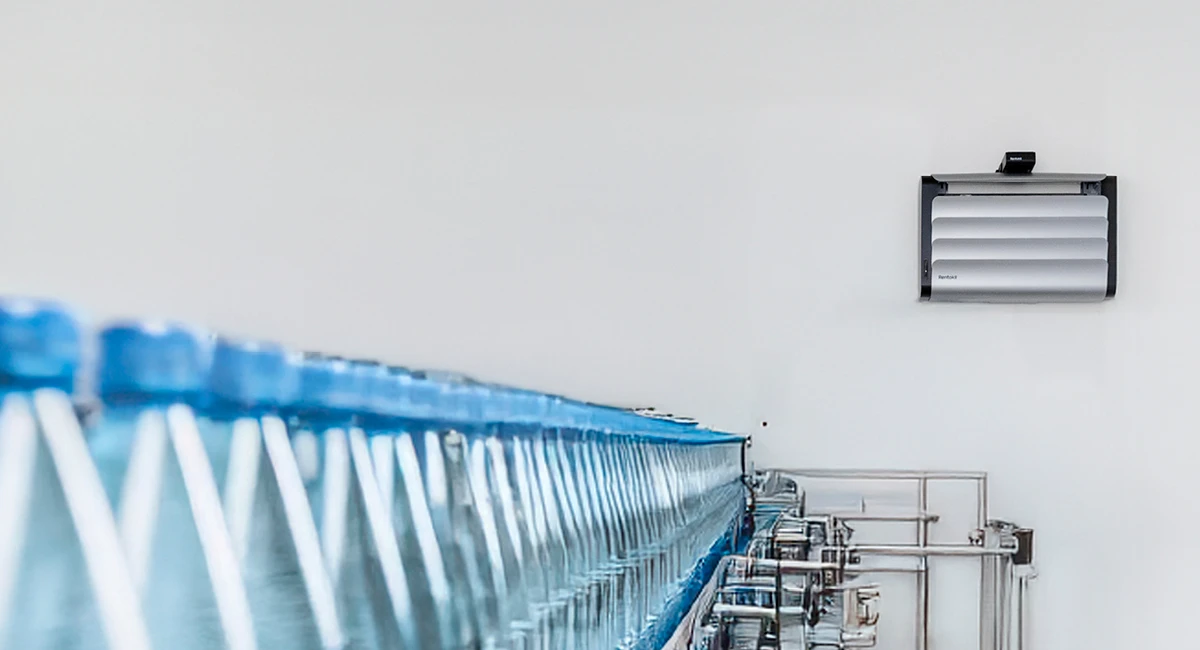
As AI continues to shape the future of fly control, we’re already seeing its potential realised in solutions like Lumnia Optix. Lumnia Optix is an AI-powered camera system that provides 24/7 monitoring for flies, making it ideal for high-dependency businesses like food processing and pharmaceuticals where zero tolerance for pests is critical.
Stop wondering if your fly control is working; start knowing
The goal of this technology is to move from reactive pest control to a proactive, data-driven approach. Katie explains the thinking behind the Lumnia Optix solution:
"The most common question from customers is 'How do I know my fly control is truly working between service visits?' Lumnia Optix was designed to answer that question. By making it a simple retrofit, we made the upgrade path seamless for customers. It combines our leading camera technology with the human expertise our customers already trust, creating a total protection system that provides constant monitoring without constant worry."
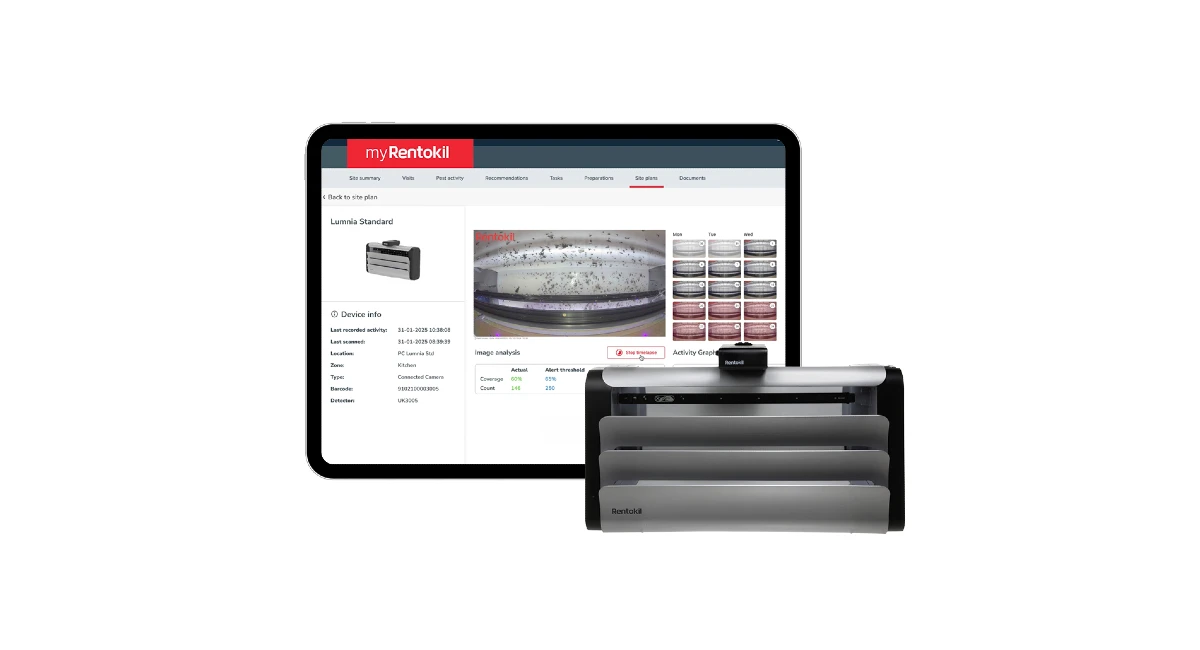
She elaborates on what makes the technology so reliable.
"Precision is everything. We built the system's AI to be accurate in identifying fly activity, and we measure that accuracy against globally recognised metrics. This means more targeted, effective responses from our pest control provider. When you add certifications like HACCP approval, it gives customers confidence that they are not just installing a piece of technology, but a complete, trusted and verified solution."
Ready to learn more about Lumnia Optix?
Lumnia Optix
AI-powered fly control cameras
- Retrofittable: Customers can upgrade to Lumnia Optix without replacing existing Lumnia ILTs.
- High-accuracy AI technology: Intelligent machine-learning technology automatically identifies and detects flies on the glueboard.
- Adjustable thresholds: Alerts are customisable for fly count, glueboard coverage and spikes in fly activity.