© 2026 Rentokil Initial plc and subject to the conditions in the Legal Statement.
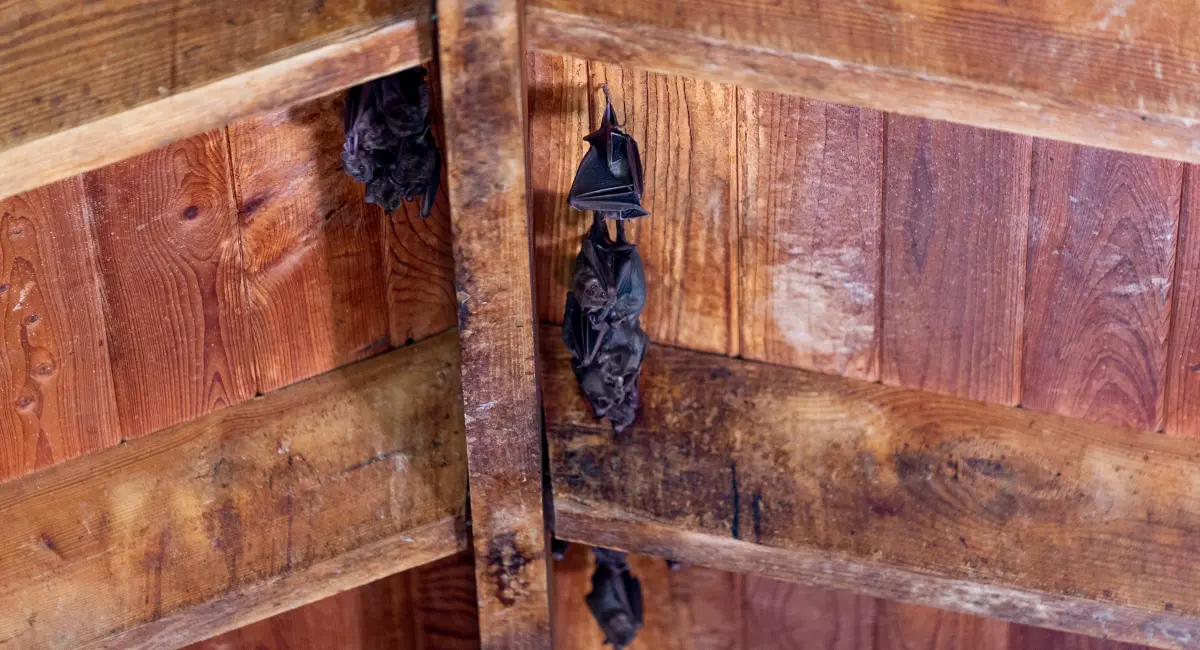
A few bats flying around your roofline at dusk may not seem like a serious concern. However, when bats begin roosting inside commercial roofs, warehouses, ceiling spaces or other parts of a facility, the consequences can extend far beyond an occasional nighttime visitor.
For businesses, unmanaged bat activity can create risks to building infrastructure, workplace hygiene, employee health and operational compliance. Because bats also play an important role in local ecosystems and may be protected by environmental legislation, managing an infestation requires careful timing and professional expertise.
The Hidden Costs of Bat Activity
Bats naturally seek sheltered, undisturbed spaces for resting and breeding. Commercial buildings can provide ideal conditions, particularly where gaps in roofing, eaves, vents or other structural openings allow easy access.
Once a colony becomes established, several problems can develop.
Structural Damage and Persistent Odours
One of the most noticeable signs of an established bat roost is the accumulation of guano, or bat droppings.
Over time, large quantities of guano and urine can contaminate roof spaces, ceilings and insulation. Moisture and waste accumulation can contribute to deterioration of building materials and create strong, persistent odours throughout affected areas.
In severe cases, contamination may require specialist cleaning and remediation in addition to measures to remove and exclude the bats.
Health and Safety Concerns
Bat guano can also present a potential health risk. Accumulated droppings may support the growth of Histoplasma capsulatum, the fungus associated with histoplasmosis. When contaminated material is disturbed, microscopic fungal spores can become airborne and may be inhaled.
This makes professional assessment particularly important when significant quantities of guano are present. Employees or maintenance teams should avoid disturbing large accumulations of bat droppings without appropriate guidance and protective measures.
Secondary Pest Problems
Bats can also be associated with parasites and secondary pests, including bat bugs. When bats leave a roost—or when exclusion is carried out incorrectly—these pests may move into other areas of the building in search of a new host. What initially appears to be a single pest problem can therefore develop into a more complicated facility-management issue.
Hygiene, Audit and Reputation Risks
For businesses operating in industries where hygiene and pest-management standards are closely monitored, visible bat activity or accumulated guano can create additional concerns.
Evidence of an unmanaged infestation may raise questions during workplace, food-safety or facility audits and can negatively affect perceptions of the organisation's hygiene standards.
Hotels, restaurants, warehouses, manufacturing facilities, healthcare environments and other commercial properties should therefore treat signs of bat activity as an issue requiring prompt assessment rather than waiting for a colony to become firmly established.
Protected Species and Maternity Season: Why Timing Matters
Bats play an important role in healthy ecosystems, consuming large quantities of night-flying insects, while some species also contribute to pollination and seed dispersal. Because of their ecological importance, bats and their roosts may be protected under applicable wildlife and environmental legislation.
One of the most important considerations for commercial property managers is bat maternity season, generally occurring from May through August. During this period, female bats form maternity colonies and give birth to young that may be unable to fly and leave the roost independently.
Bat exclusion or removal should not be carried out during the maternity period where dependent young may be present. Applicable wildlife laws and regulations may restrict the disturbance, removal or exclusion of bats during this period, and requirements can vary by territory.
Sealing entry points while flightless young remain inside can separate them from their mothers and trap them within the structure. Apart from the animal-welfare implications and potential regulatory consequences, trapped bats may die inside inaccessible roof or wall spaces, creating severe odours, contamination and secondary pest problems.
For this reason, bat management should always begin with a professional assessment. Where exclusion cannot legally or safely be performed immediately, the infestation can be evaluated and a management plan developed so that appropriate exclusion and proofing work can be completed once the protected period has ended.
For commercial property managers, early identification is critical. Discovering bat activity before maternity season provides a much better opportunity to address the problem before seasonal restrictions limit the available control options.
Proactive Bat Management for Commercial Properties
Waiting until bats have established a large colony can make the problem more difficult and potentially more costly to resolve.
Professional bat management should focus on preventing access while ensuring that any exclusion is carried out safely, humanely and in accordance with applicable regulations.
Rentokil Initial's approach can include:
1. Professional inspection and exclusion planning
The property is assessed to identify active roosting areas, potential access points and structural conditions that may be encouraging bat activity. Where legally permitted and seasonally appropriate, a safe exclusion strategy can then be developed to allow bats to leave without re-entering the building.
2. Structural proofing and ongoing maintenance
Once exclusion can safely and legally be completed, potential access points can be sealed to reduce the likelihood of bats returning. Continued monitoring and maintenance help ensure that proofing measures remain effective as buildings age or undergo repairs and alterations.
Early Intervention Is Key
If bats are regularly seen entering or leaving your commercial property, early action is important. Once maternity season begins, legal and animal-welfare restrictions may limit the exclusion work that can be performed until dependent young are able to leave the roost.
Addressing bat activity early can help protect your building, employees and operations while ensuring that any management measures are carried out responsibly and in accordance with applicable environmental requirements.
Don't let bat activity put your facility at risk. Contact Rentokil Initial today to schedule a professional commercial site assessment and develop a discreet, responsible and compliant bat-management plan for your property.
Noticed bats entering or leaving your commercial property?
Early intervention can help protect your facility while ensuring bat management is carried out safely, responsibly, and in accordance with applicable regulations.
Contact Rentokil Initial today to arrange a professional commercial site assessment and bat-management plan.
Call us on 246 429 3546 or contact us online and we’ll contact you within 24 hours to arrange an inspection with one of our pest experts.
Pest control services
Protecting homes and businesses in Barbados for over 60 years
- Safe, effective, environmentally-friendly pest control
- A range of bat management options to suit your home and business needs
- With over 16 local, accredited pest controllers, we provide a rapid-response service across all of Barbados.